
Veja também


 17.04.2026 12:42 AM
The first official round of negotiations between Tehran and Washington took place last Saturday. The outcome was unsuccessful, although both sides expressed restrained optimism after its conclusion. U.S. Vice President JD Vance stated that the parties had agreed on some contentious points, but there was no progress on the most critical issues. Iran confirmed that no progress had been made on the most pressing questions, yet neither side had rejected the idea of further meetings.
This week, U.S. President Donald Trump announced that a second round of negotiations with Iran will take place in the next two days. No information has been reported on Wednesday regarding this, indicating that negotiations are possible today or tomorrow. Trump added that the next round will also take place in Islamabad, despite slow progress in negotiations. The U.S. will again be represented by JD Vance, Steve Witkoff, and Jared Kushner.
Overall, I believe the sides will need many meetings to reach an agreement on all contentious issues. As I mentioned earlier, I do not see any reason for Iran to open the Strait of Hormuz. Through the blockade, Iran can create energy chaos worldwide and, specifically, in the U.S. Recall that oil, gas, and fuel prices are rising not only in countries that cannot supply themselves with energy resources but also in entirely energy-independent states like the U.S. American consumers continue to blame Trump for high prices at the pump, and public anger is growing. With this backdrop, Trump's party will find it extremely difficult to expect even a partial victory in the elections in November, and Iran understands this perfectly.
Tehran recognizes that the Strait of Hormuz is a means of exerting direct pressure on Trump and his political ratings. Therefore, the U.S. president is interested in ending the blockade as quickly as possible. Iran, however, does not have the urgency to respond. There are no hostilities taking place, and it will endure the U.S. blockade. Moreover, there are not that many American ships in the Persian Gulf. Therefore, from our perspective, "the ball is not in Iran's court," but rather in the U.S.'s.
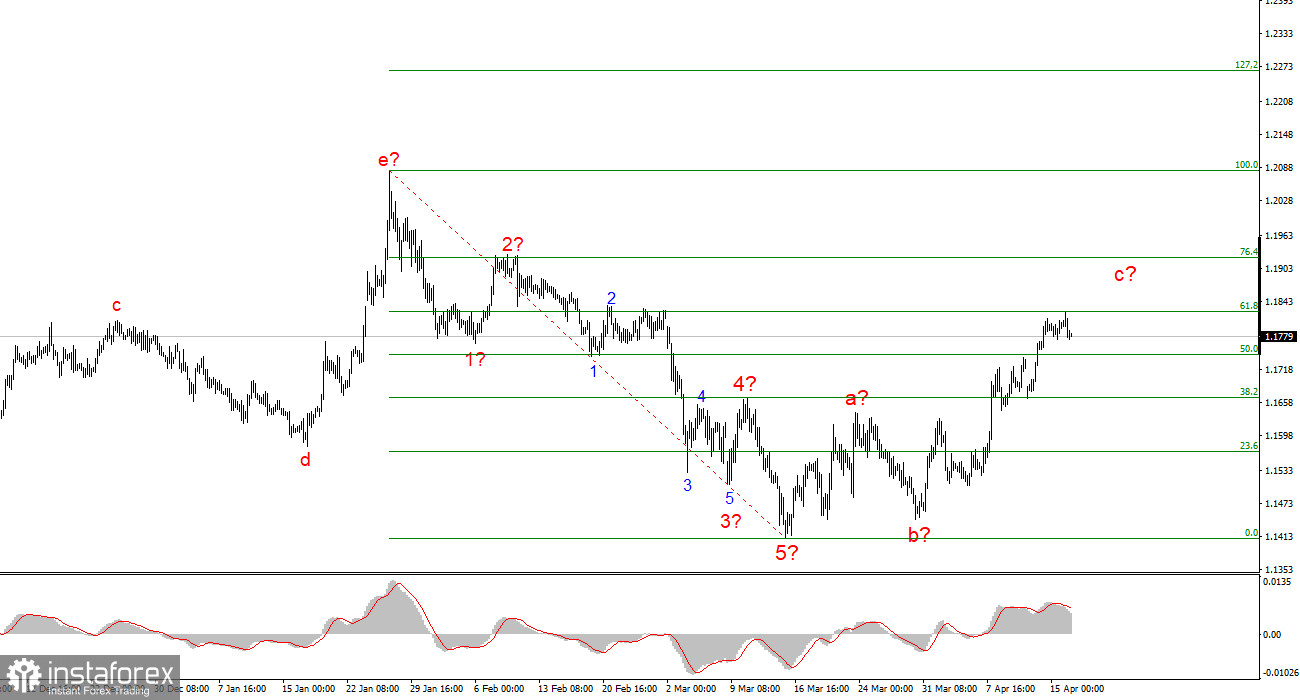
Based on the analysis of EUR/USD, I conclude that the instrument remains within an upward segment of the trend (bottom picture) and, in the short term, is within a corrective structure. The corrective wave set looks quite complete and may take on a more complex, elongated form only if a stable ceasefire is established between Iran, the U.S., Israel, and ALL other countries in the Middle East. Otherwise, I believe that a new downward wave set may start from the current positions. A failed attempt to break the 1.1824 mark may lead to a price retreat from the recent highs.
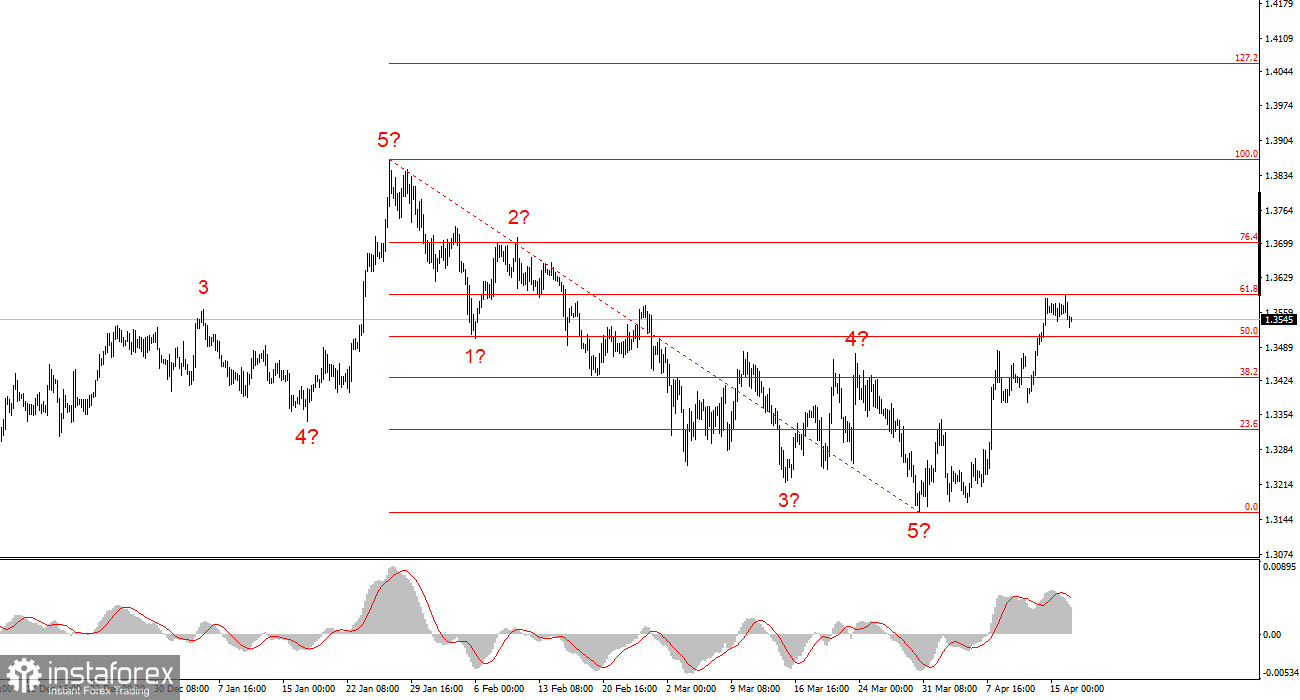
The wave picture of the GBP/USD instrument has become clearer over time, as I had anticipated. Now we see a clear five-wave downward structure with an extension in the third wave on the charts. If this is indeed the case, and geopolitics does not provoke a new collapse of the instrument in the near future, we can expect the formation of at least a three-wave corrective structure, within which the pound may rise to levels of 1.3594 and 1.3698, corresponding to 61.8% and 76.1% Fibonacci levels. If a ceasefire is reached, the corrective segment of the trend may turn into an impulsive one. A failed attempt to break the 1.3594 mark could lead to a retreat from the reached peaks.


