
Veja também


 02.07.2026 01:08 AM
Those who first believed in peace paid the price for it. The euro hoped that the European Central Bank's rate hike in June would be just the first step. However, the decline in oil prices amid efforts to resolve the conflict in the Middle East deprived the region of its main inflation driver and cooled the enthusiasm of the hawks from Frankfurt.
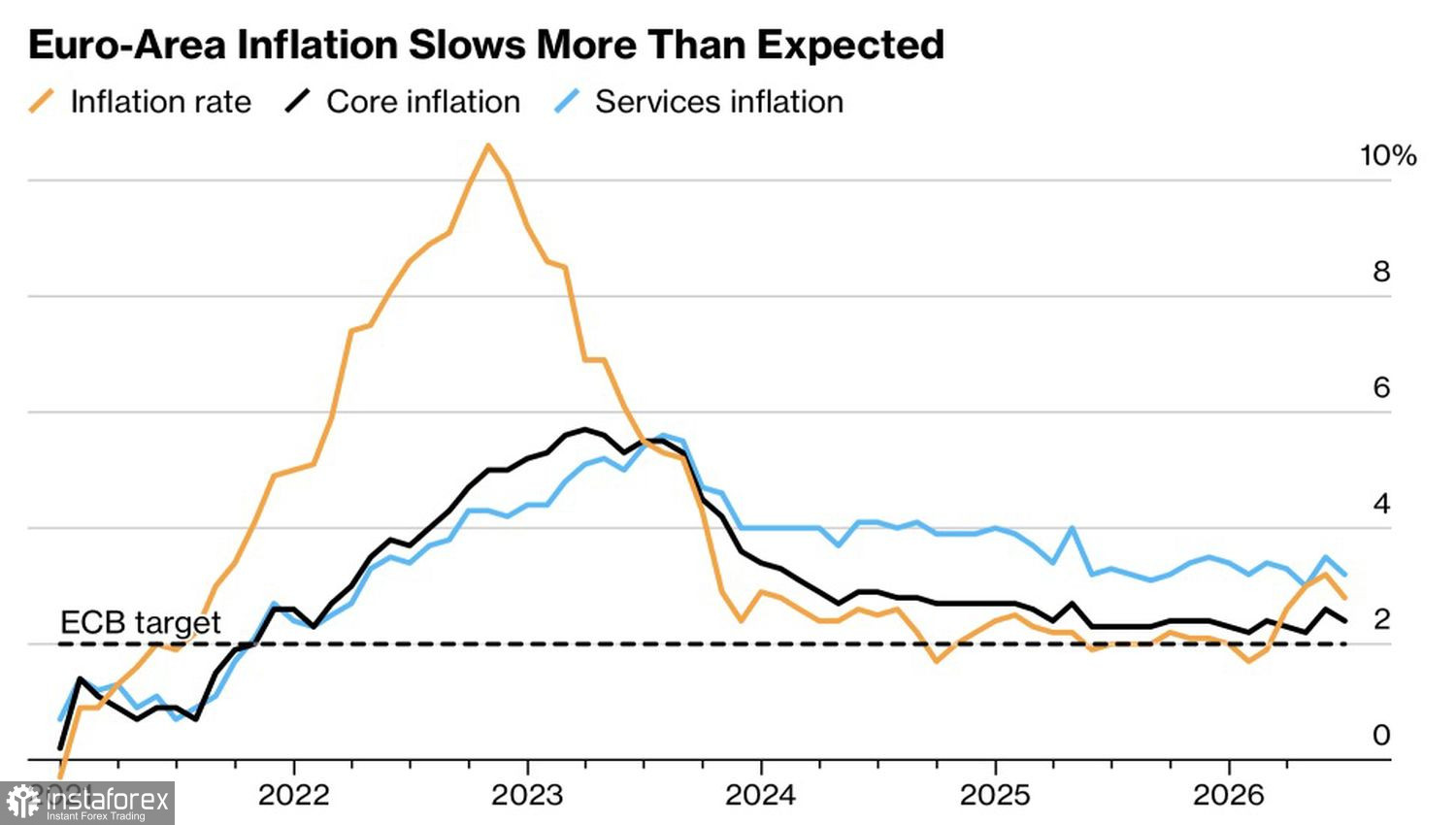
Consumer prices in the eurozone rose by 2.8% in June, down from 3.2% the previous month, while Bloomberg experts expected 3%. Core inflation also slowed more than expected, and the services price indicator retreated to 3.2%. In France, the figure even returned to the ECB's target of 2%.
According to Bloomberg Economics, if the decline in oil prices proves sustainable, it would indicate that the peak of CPI growth was reached in May. Arguments for an additional rate hike have significantly weakened. Christine Lagarde's rhetoric does not suggest readiness to act in 2026. However, if this does occur, it would be about completing a short cycle of monetary tightening rather than continuing it.
Not all members of the Governing Council share such a clear stance. Bundesbank President Joachim Nagel noted that, despite the pleasant surprise from oil prices, the fate of the fragile ceasefire in the Middle East remains uncertain. According to him, the July and September meetings remain "an open race." Governing Council member Martins Kazaks expressed himself more definitively: the urgency of sequential steps has significantly decreased. The markets interpreted this as a signal of a pause in the tightening of monetary policy.
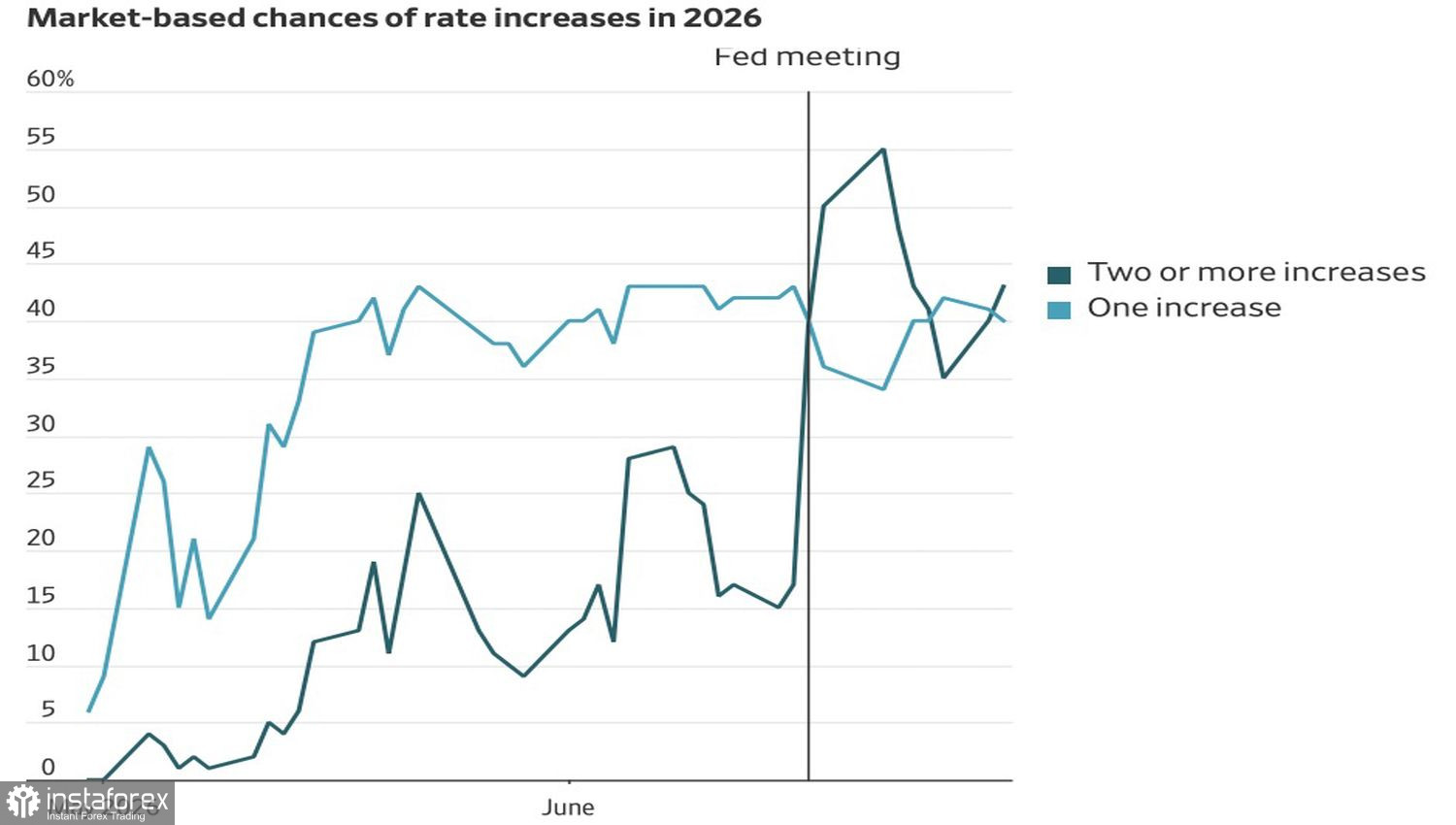
Meanwhile, across the ocean, a mirrored story is unfolding. Fed Chairman Kevin Warsh promised to speak less, letting the markets guess at the fate of rates. However, at his first press conference, investors had already heard enough: the futures market raised the probability of a federal funds rate hike in July to nearly 36%—an unimaginable level just a couple of weeks ago.
As a result, the divergence in monetary policy is working against EUR/USD. While the ECB is preparing to end the tightening cycle with a single step, the Federal Reserve is unexpectedly finding room to tighten. Frankfurt's caution and Washington's "hawkish" surprise create a headwind for the major currency pair.
Will the ceasefire in the Middle East last long enough to finally remove inflation risks from the eurozone? I doubt the parties will avoid new shocks, which means both the ECB and the euro will have to keep their noses to the wind.
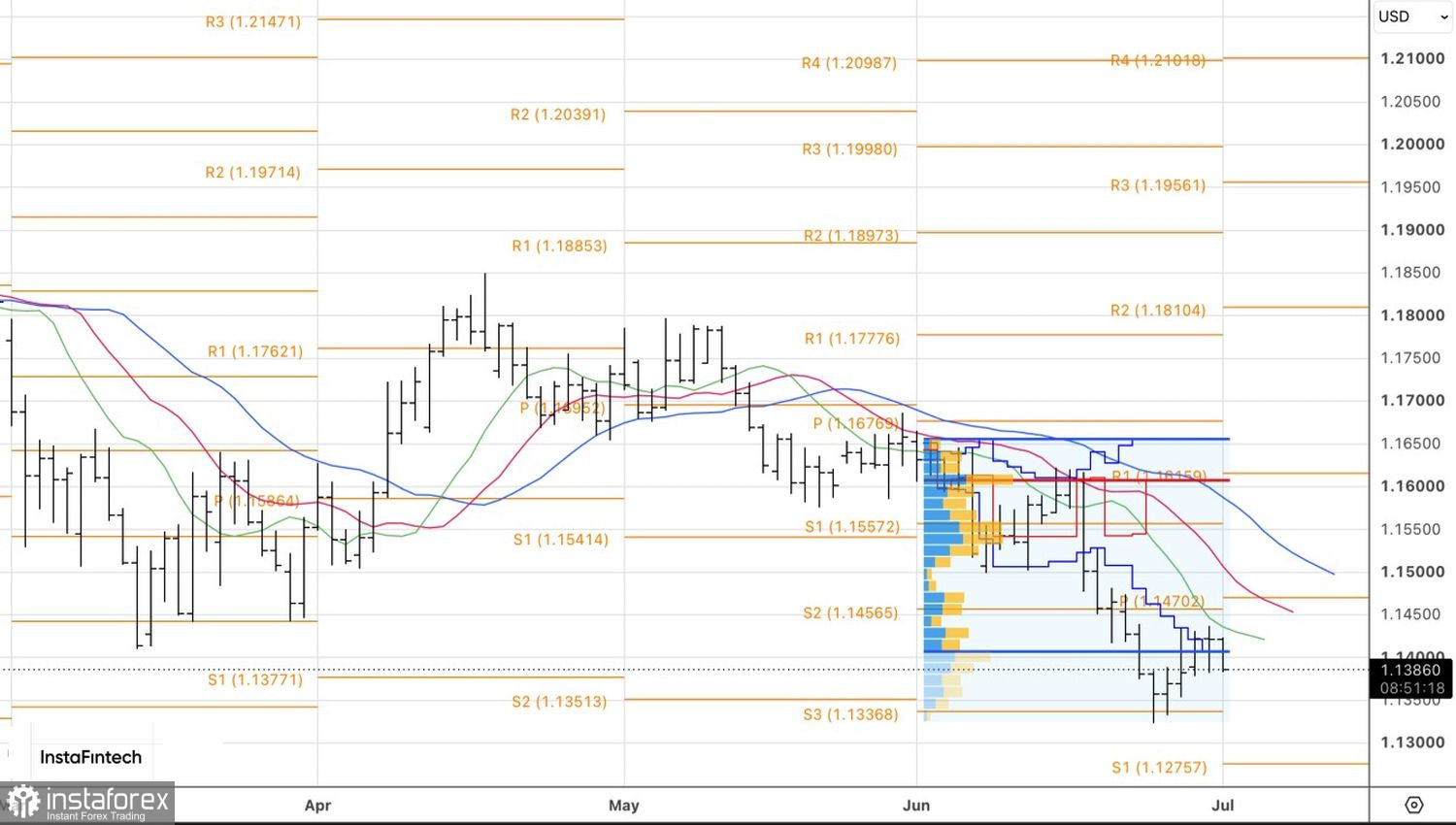
Technically, on the daily chart for EUR/USD, a combination of a central doji bar and two bars with opposite bodies signals a counterattack by the bears. If they manage to solidify below 1.14, emphasis should be placed on forming short positions towards 1.12.


