
یہ بھی دیکھیں


 21.10.2026 09:34 AM
Oil rose today as attacks on ships around the Strait of Hormuz threatened supplies and U.S. industry data pointed to another drawdown in inventories. Brent climbed above $110 a barrel, WTI traded around $99. Prices have risen roughly 80% since the start of the year.
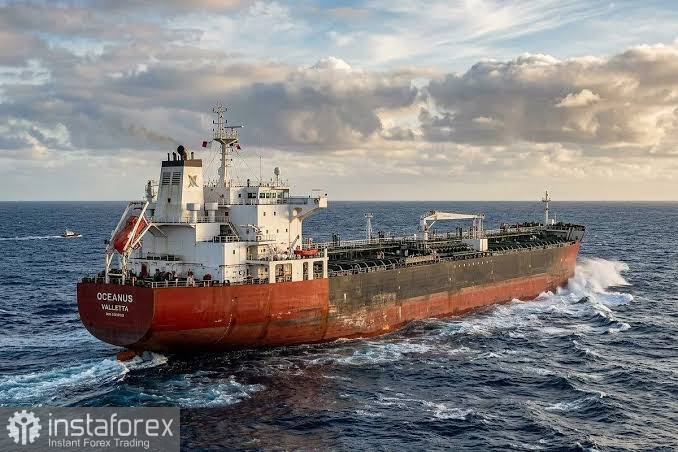
Support for the market came from reports on Iranian state TV IRIB News that a supertanker in the Hormuz had been blown up by a naval mine. The channel did not name the vessel or the time of the incident. At the same time, the American Petroleum Institute reported that U.S. crude inventories fell by 4.9 million barrels last week, and gasoline and distillate stocks also declined. If Wednesday's official data confirm the figure, it will be the third consecutive weekly decline.
I note that the shortage is felt not only in the U.S. Global inventories continue to be depleted, and according to the International Energy Agency, observed stocks at the end of September were about half a billion barrels below the pre-war level, while onshore stocks were the lowest at least since 2016. U.S. data only added signs of an increasingly tight global supply.
I remind you that risks in the strait itself are also rising. The number of attacks on ships has risen to 12 a week, up from two to four in the summer; because of this, one major bank raised forecasts for Dated Brent. And although oil flows through the strait remain steady at about 12 million barrels per day, they are roughly 4 million below the recent peak, and Iranian strikes increasingly hit engine rooms of vessels and cause more serious damage than at the start of the conflict.
Meanwhile, the Donald Trump administration is trying to lower energy prices before next month's midterm elections. Measures include lifting tariffs related to Russian energy exports, a deal to export diesel fuel with Moscow, and permission to sell sanctioned tankers so they can carry oil.
After yesterday's disinformation and the reaching of an agreement, talks to end the conflict continue, but media reports say news of an imminent deal is inaccurate. Earlier unconfirmed information on Tuesday already knocked oil off five-month highs, and Brent momentarily fell 3.3% before later recovering part of the losses.
All this suggests the market is not ready to price in a quick settlement while actual shipments through Hormuz remain below pre-war levels and inventories are melting. I tend to think that as long as attacks on ships continue and U.S. and global stocks decline, Brent will hold near $110, and any confirmation of a U.S.–Iran deal will likely produce only a temporary pullback.
As for the current technical picture for oil, buyers need to take the nearest resistance at $105. This sets up a target at $109, above which a breakout will be fairly difficult. The furthest target will be the $113 area. In case of an oil decline, bears will try to seize control of $101. If that is achieved, a break of the range will deal a heavy blow to bulls' positions and push Oil to a $98 low, with the prospect of moving down to $95.


