
यह भी देखें


 01.05.2026 05:28 AM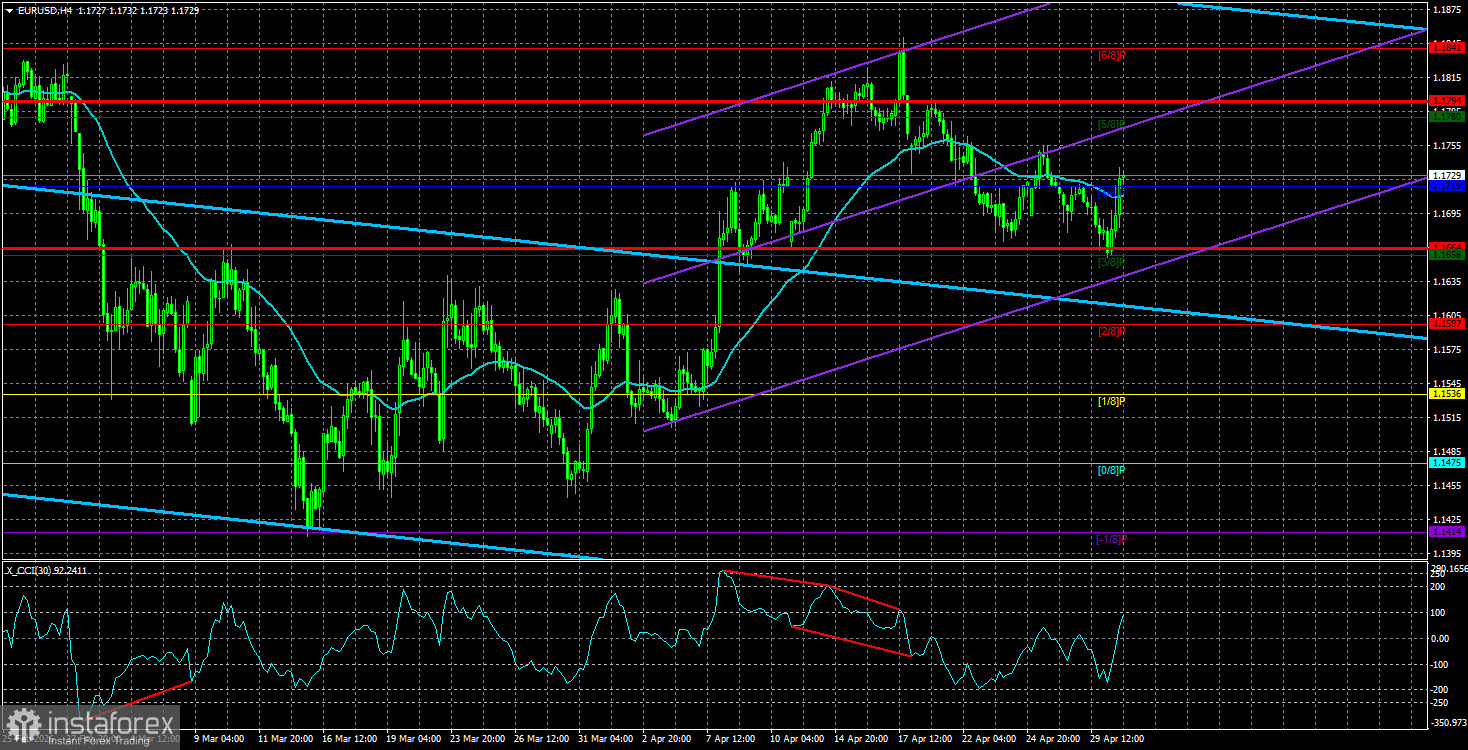
The EUR/USD currency pair traded on Thursday in a manner similar to the last few weeks. The chart below clearly shows that volatility has been actively declining in recent months and is currently at quite "average" levels. On the day of the FOMC meeting, which was Jerome Powell's last as head of the U.S. central bank, the EUR/USD pair traded with only 60 pips of volatility. This is even lower than the average for the past 30 trading days. Is there any point in discussing how the market is currently reacting to fundamentals or macroeconomics?
We won't even mention the relatively important reports on German inflation and U.S. durable goods orders. The market didn't even notice them. However, the general consensus is that the April FOMC meeting was quite unexpected due to the so-called "split" within the Monetary Committee. This split emerged when three FOMC members rejected the wording that allowed for future rate cuts. We do not see any divergence in opinions and want to remind you that last year, three members of the Monetary Committee actively voted for cutting rates at almost every meeting. The names of these three are Michelle Bowman, Christopher Waller, and Stephen Miran. The latter is a protege of Donald Trump, while the first two had previously contended for Powell's vacant position. Therefore, it is not surprising that this trio actively voted for policy easing. However, at that time, there was no discussion of a split within the Federal Reserve.
As for the final communique from the April meeting, the central bank's tone remained neutral. The Fed is now considering all options for changing monetary policy. Powell did not dismiss the possibility of easing, nor did he deny the potential for tightening, but he clearly emphasized that inflation comes first. Therefore, it is now undisputed that a large portion of the FOMC will lean towards raising the key rate, as there is no doubt of further inflationary acceleration in the U.S. Just in March, the figure surged by 0.9% year-on-year. Oil prices continue to rise, and Trump shows no signs of ending the conflict in the Middle East or the blockade of Iran.
What will transpire at the next Fed meeting is the most interesting question. First, Powell remains a member of the FOMC for at least another year or two. Second, starting May 15, another protege of Trump, Kevin Warsh, will lead the Fed. Third, both Warsh and Miran will likely demand a lowering of the key rate. Fourth, the majority of the committee will remain loyal to Powell, who will also continue to serve on the Monetary Policy Committee. A serious confrontation is brewing. However, none of this matters right now, as the market has not even given such "passions" a second thought. That is precisely why we insisted that it is better to "count chickens in the fall" and not make hasty conclusions. Essentially, there was no reaction to the FOMC meeting.
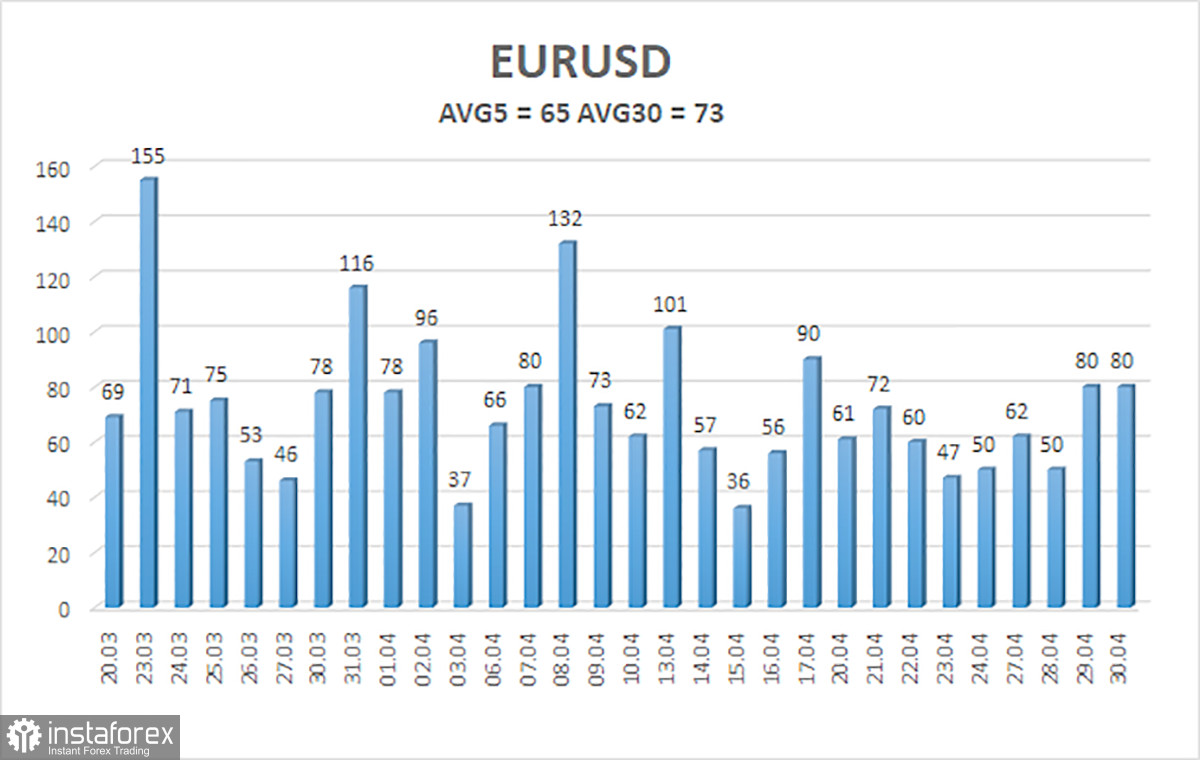
The average volatility of the EUR/USD currency pair over the last five trading days as of May 1 is 65 pips, characterized as "average." We expect the pair to trade between 1.1664 and 1.1794 on Friday. The upper linear regression channel has turned downward, indicating a trend shift to a downward movement. However, the upward trend of 2025 could actually resume. The CCI indicator has entered the overbought zone and formed a "bearish" divergence, signaling a potential downward pullback.
S1 – 1.1719
S2 – 1.1658
S3 – 1.1597
R1 – 1.1780
R2 – 1.1841
R3 – 1.1902
The EUR/USD pair maintains an upward trend amid the weakening influence of geopolitics on market sentiment and the reduction of geopolitical tensions. The global fundamental backdrop for the dollar remains extremely negative, so we still expect the pair to rise in the long term. When the price is below the moving average, short positions can be considered with targets of 1.1658 and 1.1597 on technical grounds. Above the moving average line, long positions are relevant with targets of 1.1780 and 1.1841. The market is distancing itself from the geopolitical factor, while the dollar is losing its only growth driver.

