
यह भी देखें


 10.04.2026 04:09 AM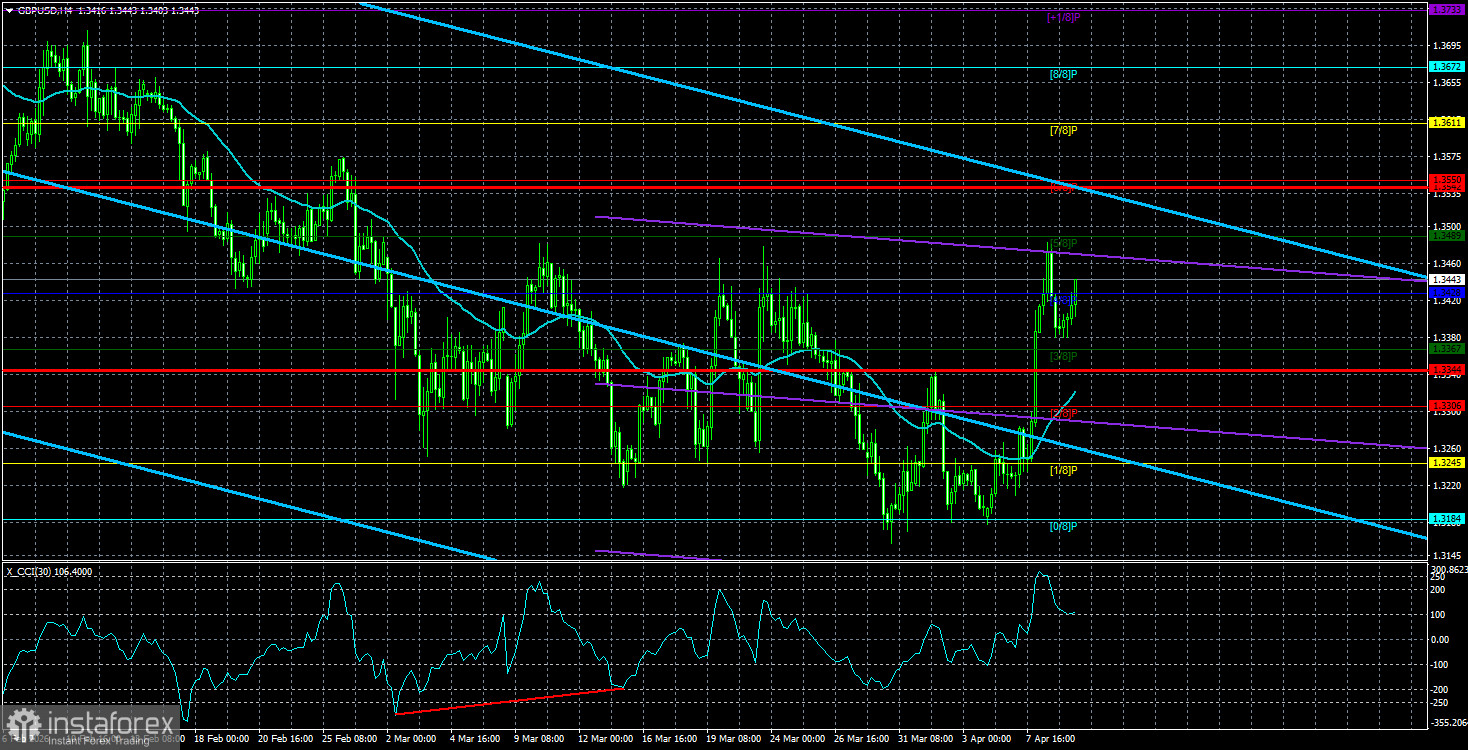
The GBP/USD currency pair traded relatively calmly on Thursday, though it still showed an upward bias. Frankly speaking, under the current circumstances, any decline in the dollar seems somewhat strange, as there has essentially been no real ceasefire in the Middle East. It exists only on paper. Therefore, there are no particular reasons for traders to be joyful.
However, an alternative scenario is possible. For the past two months, we have repeatedly stated that the geopolitical factor has a shelf life. Let's remember that the war between Ukraine and Russia began over four years ago and initially had a significant impact on risk assets, safe-haven currencies, and the energy sector. But over time, the world has learned to come to terms with the new reality, and the Ukrainian-Russian conflict has long ceased to affect currencies and energy markets in such a destructive manner.
The same could happen with the conflict in the Middle East. The market has priced in the fact of the war in the Middle East; oil prices soared one and a half times, and it is unlikely that the situation can become worse, as Iran cannot block other oil arteries, cannot block the Strait of Hormuz a second time, and cannot abandon its own oil exports. All investors and capitalists seeking refuge from risks had at least a month and a half to find it. It is quite possible that even with the continuation of the conflict in the Middle East, the dollar will no longer rise.
Look at the daily time frame for the EUR/USD pair—the upward trend is still intact, and the dollar has failed once again to correct more than 23.6% on the Fibonacci scale. Now, look at the daily time frame for the GBP/USD pair—the upward trend remains, despite a drop of 700 points. The market has accounted for the geopolitical factor in the Middle East; how much more can the dollar increase based solely on this factor when all other factors are against it?
Moreover, negotiations between the U.S. and Iran are ongoing regarding a long-term peace agreement, and this is what matters most right now. It does not matter when peace will be achieved; what matters is that it is achieved. Thus, it is likely that the market believes in the ceasefire in the Middle East and, alongside that, no longer needs the safe dollar, which carries numerous economic issues.
Of course, such conclusions are quite bold. However, if not for the war in the Middle East, the latest drop in both currency pairs would not have occurred. Considering the monetary policies of the Federal Reserve, the Bank of England, and the European Central Bank, along with the macroeconomic backdrop in the U.S., the dollar against the pound would likely already be around the 40 level. As before, we expect the resumption of the trends from 2022 and 2025.
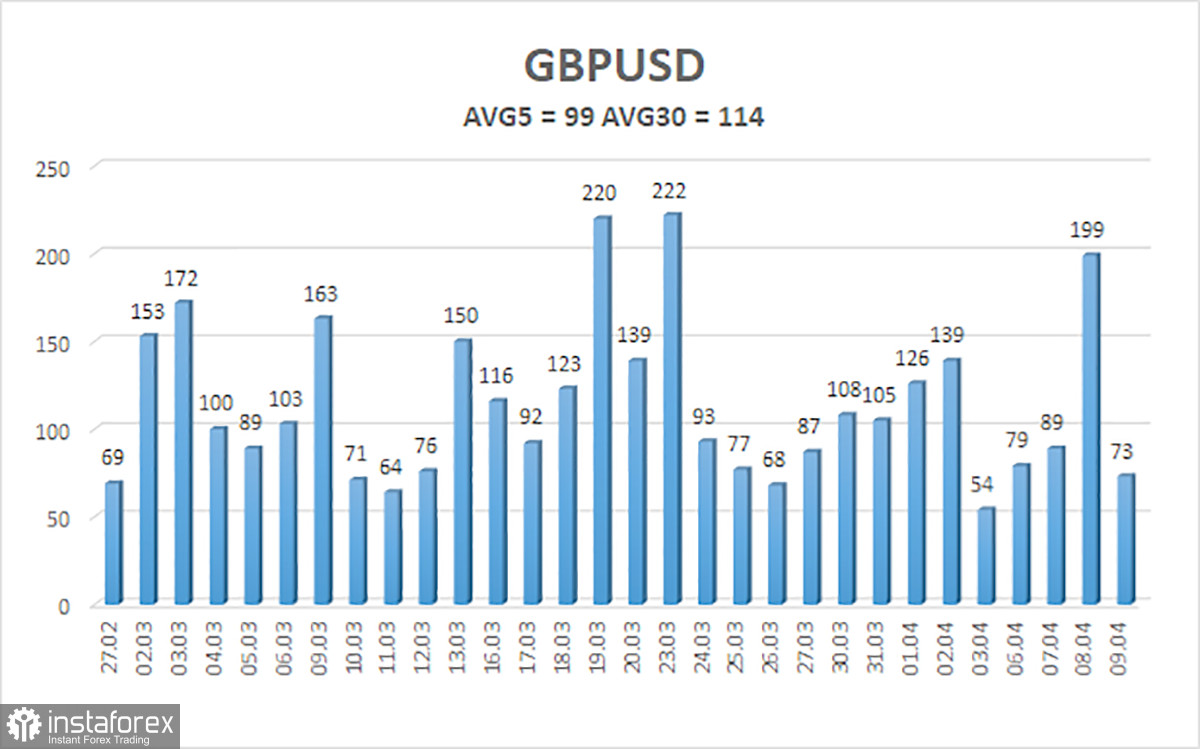
The average volatility of the GBP/USD pair over the last five trading days is 99 pips, which is considered "average" for this currency pair. On Friday, April 10, we expect the pair to trade within a range between 1.3344 and 1.3542. The upper channel of the linear regression has turned downward, indicating a trend change. The CCI indicator has entered the oversold area twice and has also formed a "bullish" divergence, which again warns of the conclusion of the downward trend. The indicator is now in the overbought area...
The GBP/USD currency pair has been moving downward for a month and a half, but its long-term prospects have not changed. Trump's policies will continue to pressure the U.S. economy, so we do not expect the dollar to grow in 2026. Thus, long positions targeting 1.3916 and above remain relevant as long as the price remains above the moving average. When the price is below the moving average line, short positions can be considered, with targets at 1.3184 and 1.3144, based on geopolitical factors. In recent months, nearly all news and events have turned against the British pound, resulting in a prolonged downward trend. Geopolitics remains a key factor.

