
यह भी देखें


 11.02.2026 09:44 AM
Fear returned to US equities after retail sales data painted a gloomy picture for the American economy, and Altruist announced a new AI tool capable of creating personalised tax strategies by interpreting financial documents without manual input.
Where earlier the sell-off hit software makers, investors are now trying to exit the main beneficiaries of that portfolio rotation. The blow landed on financial services issuers, pushing the S&P 500 back. Bulls are soothing markets, arguing that nothing unusual has happened — this is simply a reallocation of assets within portfolios.
Dynamics of US equity trading volumes
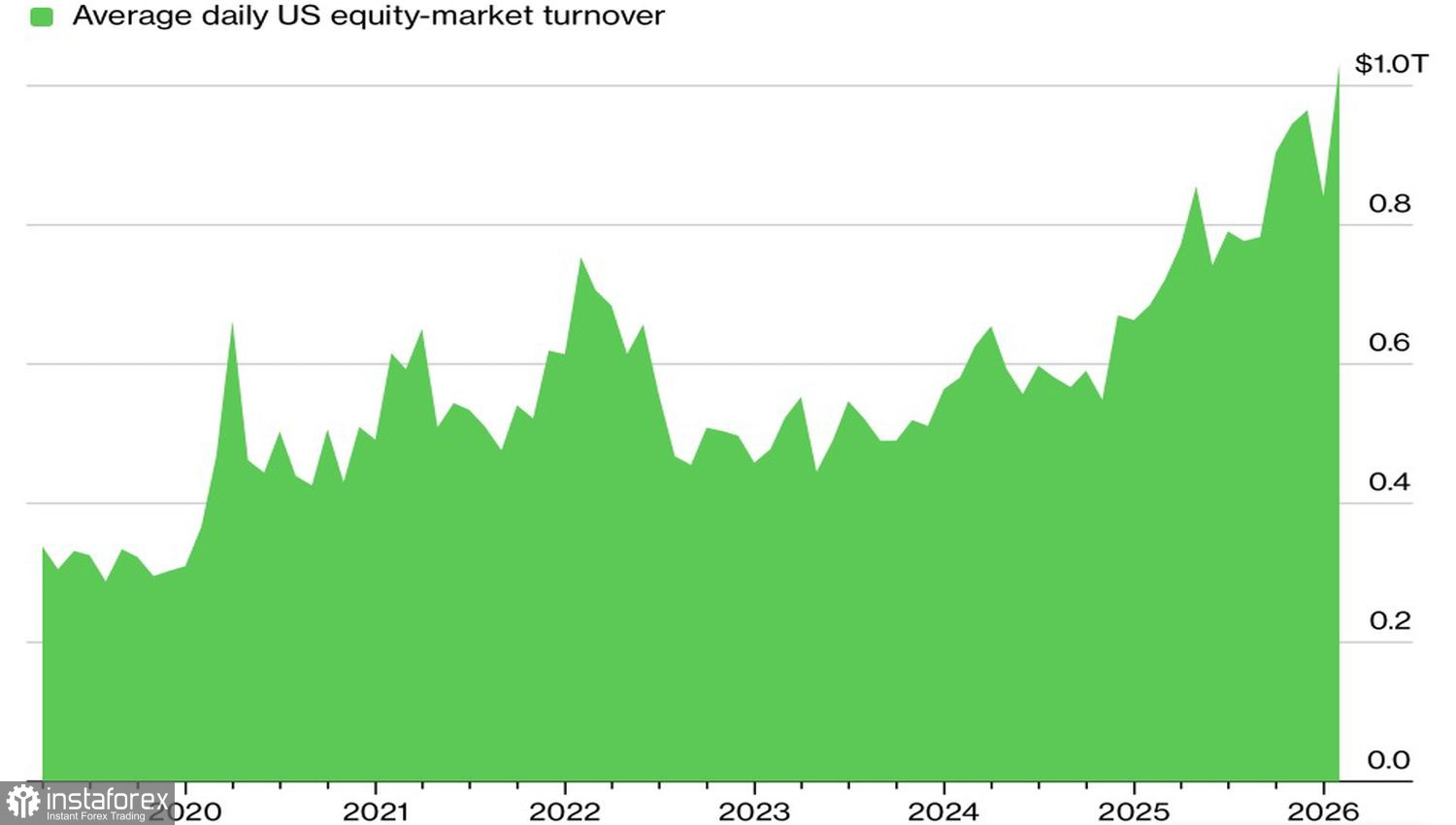
That reallocation has translated into record equity trading volumes. Daily turnover in January reached $1.03 trillion, up 50% year-on-year. Nineteen billion shares change hands each trading day, marking a historic peak.
UBS Global Wealth Management expects the S&P 500 to rise to 7,300 in June and 7,700 in December as solid economic growth supports strong corporate earnings. In this respect, the failure of retail sales to increase in December — a month when Americans typically loosen their purse strings — provided a reason for concern and selling in the broad index.
The Atlanta Fed's leading indicator revised Q4 US GDP estimates down from 4.2% to 3.7%, and Capital Economics warns that bad weather in January is likely to slow the economy further. By contrast, Wells Fargo argues that upside earnings surprises and tax refunds could help accelerate GDP.
Dynamics of S&P 500 ex-Tech and Nasdaq Composite
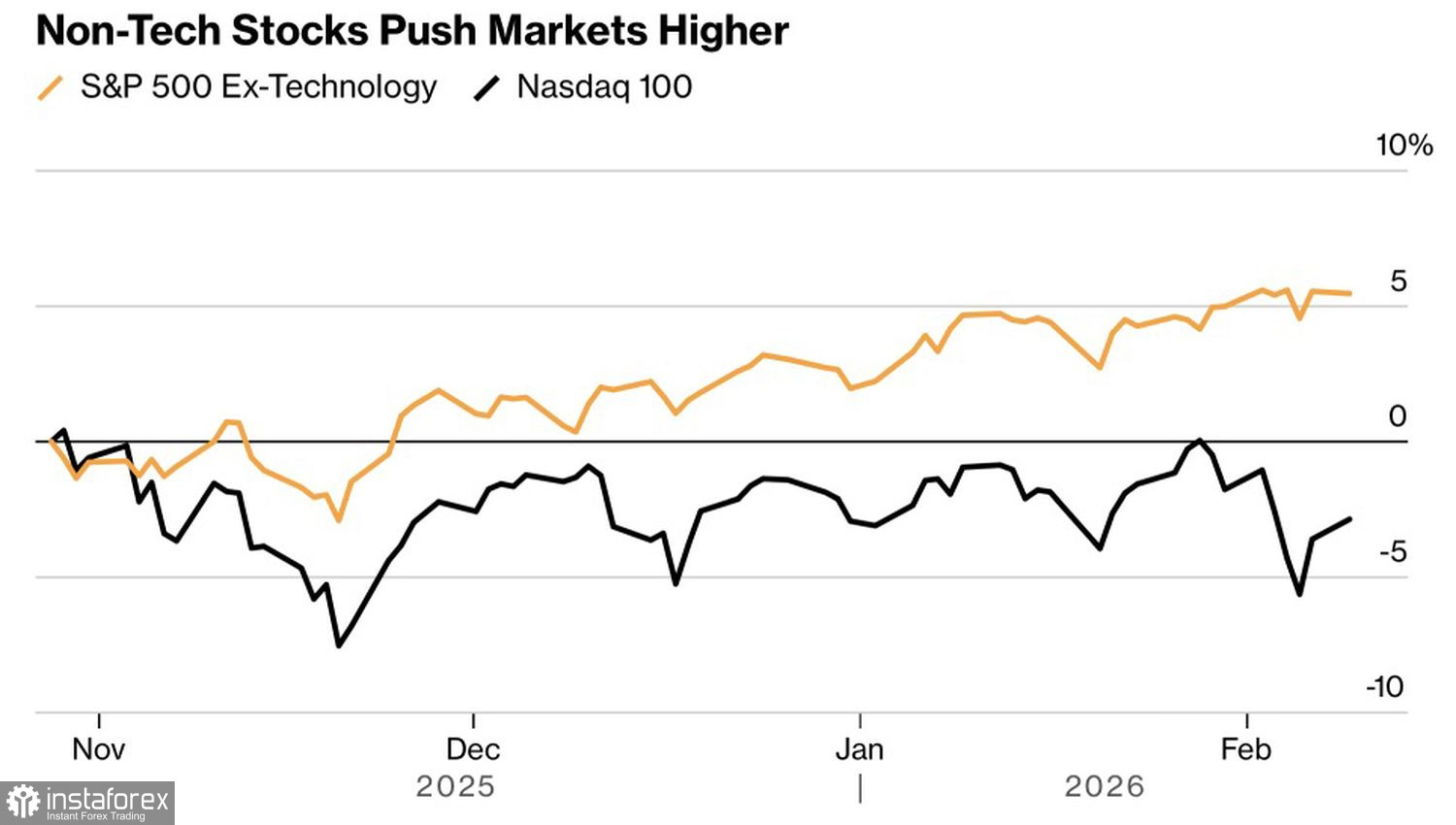
It appears investors still see the cup as half full. Rotation continues across the equity market. Tech names have become a reverse carousel that investors are eager to abandon, which is raising volatility. By contrast, quiet havens in traditional sectors are in demand, and their performance is directly tied to the health of the US economy.
In these conditions, it is unsurprising that the Russell 2000 and the Dow Jones have outperformed the S&P 500 and the Nasdaq Composite. Yesterday's leaders, including the Magnificent Seven, were actively sold, while an unwelcome retail sales surprise raised worries about the broader economic outlook. Will the January jobs report help? Further deterioration in the labor market will revive talk of a recession.
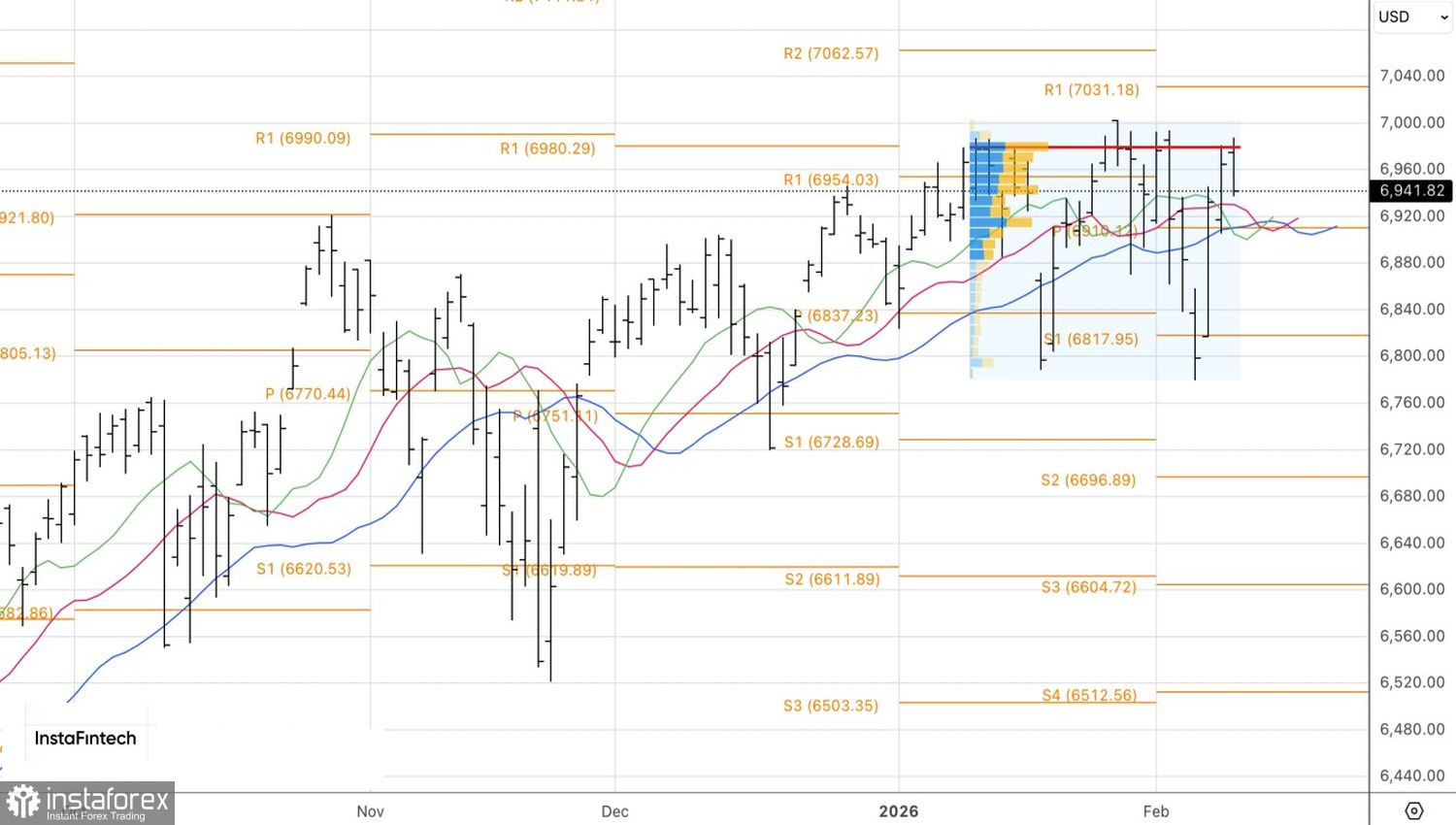
Technically, the S&P 500 tested fair value at 6,980 on the daily chart. The test failed, and bulls stepped back. A successful break above that level would provide a basis to add to long positions.

