
See also


 09.02.2026 09:07 AM
The test of the 156.86 price level occurred when the MACD indicator had already moved significantly below the zero mark, limiting the pair's downside potential. For this reason, I did not sell the dollar.
The financial markets in Japan began the week with increased volatility, driven by the results of the early parliamentary elections held over the weekend. The ruling party of the current Prime Minister, Sanae Takachi, won, causing notable fluctuations in the Japanese yen's exchange rate. This event, which resulted from deep political processes, has immediate implications on the international stage, eliciting mixed reactions and expectations. The triumph of Prime Minister Takachi, who received a mandate of trust from voters, is an important signal for both domestic and foreign policy in Japan. Her campaign was built on promises of stability and strengthening international ties. In this context, particularly significant was Takachi's statement about the unlimited nature of the partnership between Japan and the U.S., which was undoubtedly viewed positively by the American side, including approval from President Trump. Riding this political wave, the yen became more volatile, strengthening against the U.S. dollar. This strengthening may be linked to investors' expectations of more predictable, stable economic policies under Takachi's leadership.
As for the intraday strategy, I will primarily rely on implementing scenarios #1 and #2.
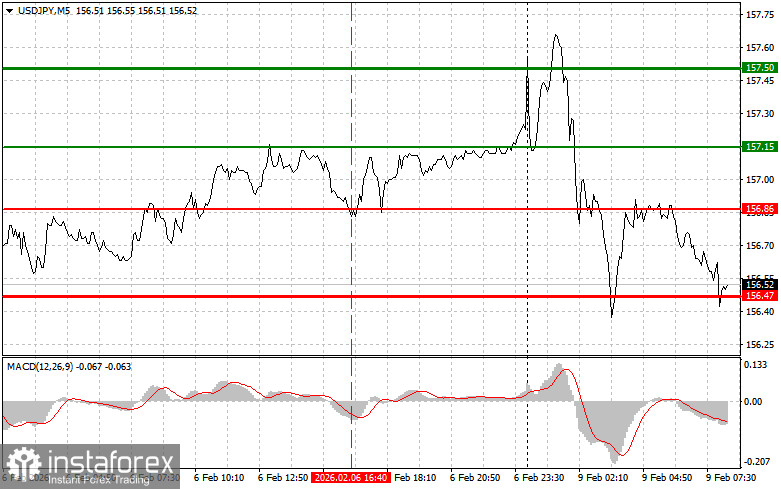
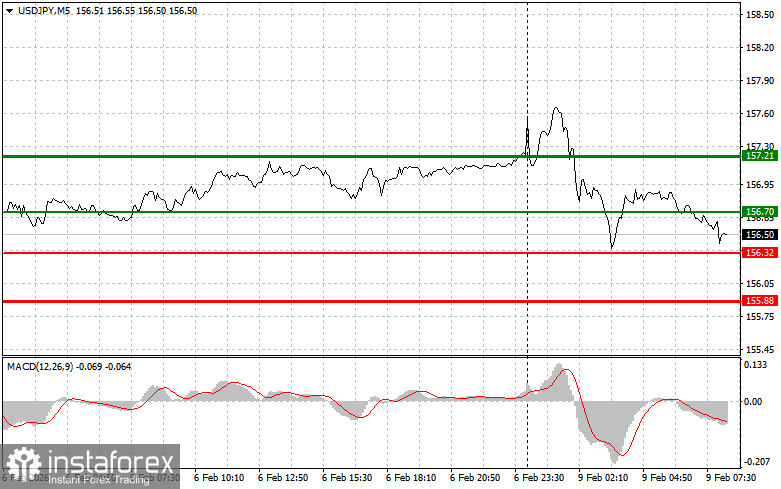
The thin green line represents the entry price at which one can buy the trading instrument;
The thick green line represents the approximate price where one can set Take Profit or secure profits, as further growth above this level is unlikely;
The thin red line represents the entry price at which one can sell the trading instrument;
The thick red line represents the approximate price where one can set Take Profit or secure profits, as further decline below this level is unlikely;
The MACD indicator: when entering the market, it is important to consider overbought and oversold zones.
Important: Beginner traders in the Forex market should be very careful when making entry decisions. It is best to stay out of the market before important fundamental reports are released to avoid getting caught in sharp price fluctuations. If you decide to trade during news releases, always set stop orders to minimize losses. Without setting stop orders, you can quickly lose your entire deposit, especially if you do not use money management and trade large volumes.
And remember, for successful trading, it is essential to have a clear trading plan, like the one presented above. Making spontaneous trading decisions based on the current market situation is inherently a losing strategy for an intraday trader.


