
See also


 10.10.2025 06:53 AM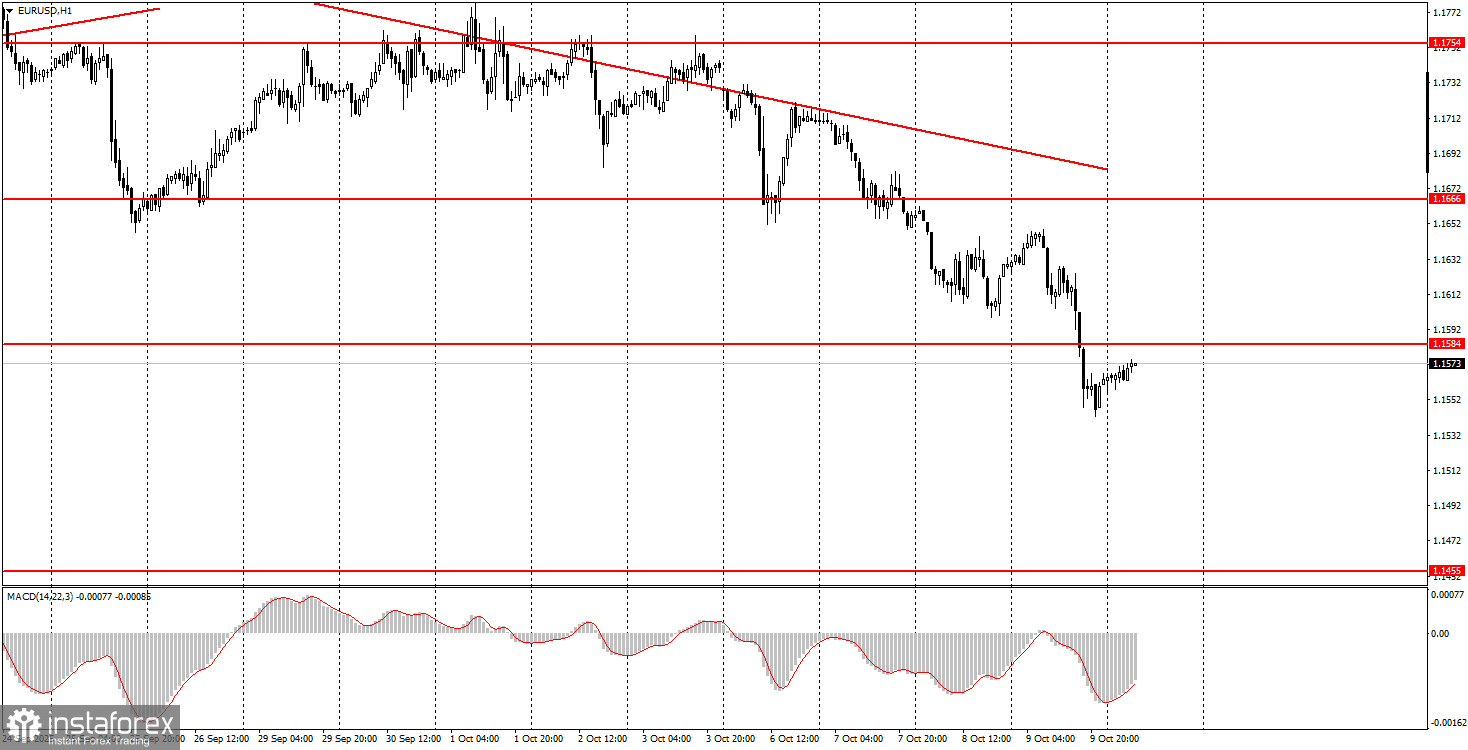
Very few macroeconomic reports are scheduled for Friday, as has been the case throughout the entire current week. Essentially, the only notable economic data so far was Germany's industrial production, which once again showed extremely weak — in fact, negative — results. That's all we've really seen.
Today, the University of Michigan Consumer Sentiment Index will be released in the United States. It's not a particularly important indicator, and this week's market behavior has shown that traders don't care about the reasons they're buying the U.S. dollar — the same dollar that was aggressively sold off over the past eight months.
Two fundamental events are scheduled for today. In the U.S., members of the Federal Reserve's Monetary Policy Committee, Musalem and Goolsbee, will deliver speeches.
However, yesterday Jerome Powell spoke and clearly laid out the Fed's current stance: monetary policy decisions will continue to depend on macroeconomic data, and any further interest rate cuts are not guaranteed.
It's worth noting that Powell has been repeating the same rhetoric for months. He doesn't rule out two more cuts before the end of the year, but he isn't committing to them either.
What's unclear at this point is how the Fed will make its policy decision at the end of October if the government shutdown is still ongoing, since the key reports on inflation, unemployment, and the labor market have not been published in October.
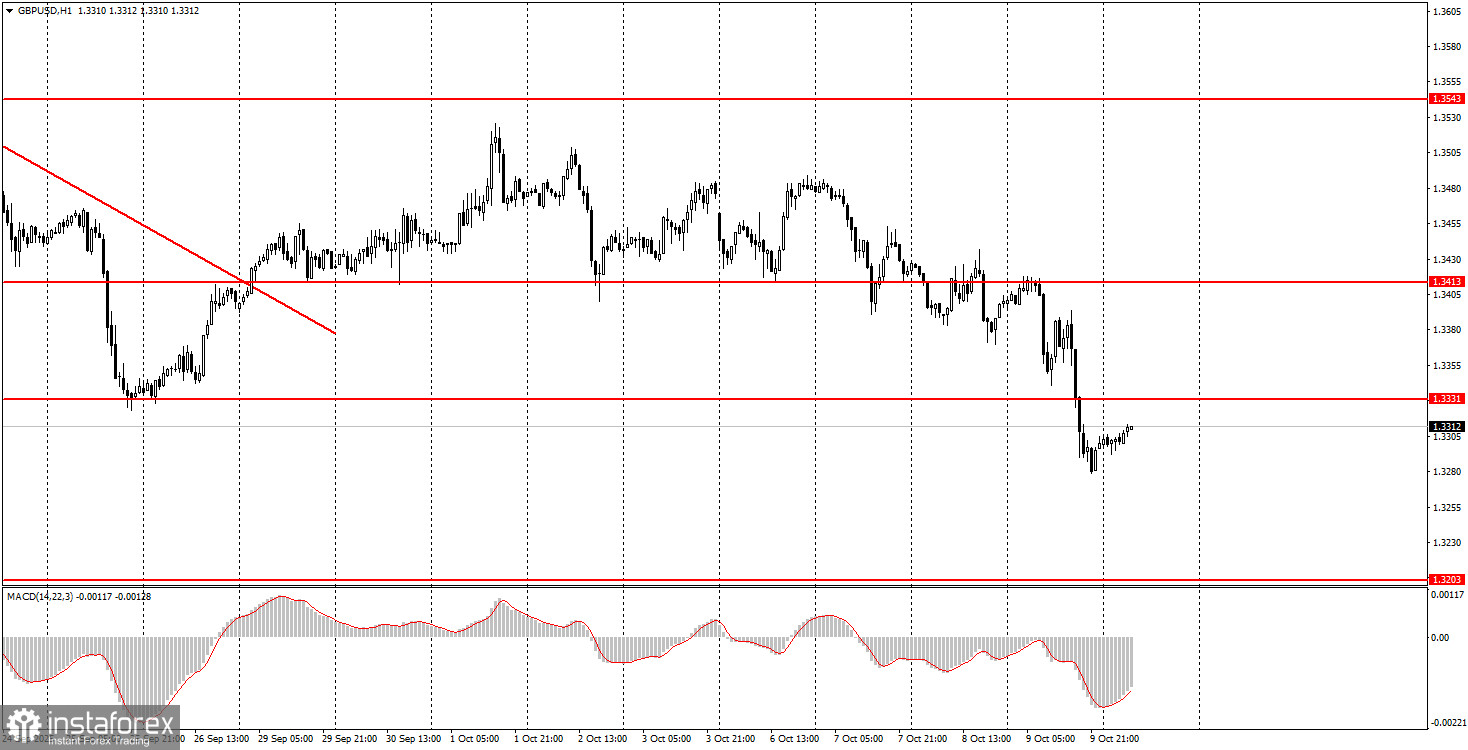
As we head into the final trading day of the week, both major currency pairs (EUR/USD and GBP/USD) may continue to trade chaotically and irrationally. So far, both have primarily been falling — and it's been very difficult to explain exactly why. That means today's declines in the euro and the pound could continue — no specific reasons are needed at this point. Therefore, EUR/USD can be traded from the 1.1571–1.1584 zone, and GBP/USD can be traded from the 1.3329–1.3331 zone.


