
আরও দেখুন


 03.09.2026 03:39 PM
Things are coming full circle, and the market now feels almost biblical in practice. After declines in seven of the past nine sessions, EUR/USD finally found footing, and euro bulls launched a counterattack aided by an unexpected ally, the Japanese yen.
The yen is strengthening against major currencies, and global bond yields are falling in its wake. The explanation is simple: economies and markets are normalizing after an abnormal era of political interventions and cheap money. The Bank of Japan is tightening policy and winding down bond purchases, which is lifting domestic yields. Japan's $4.3 trillion economy and $8 trillion bond market are too large for the rest of the world to ignore.
Currency risk hedging dynamics
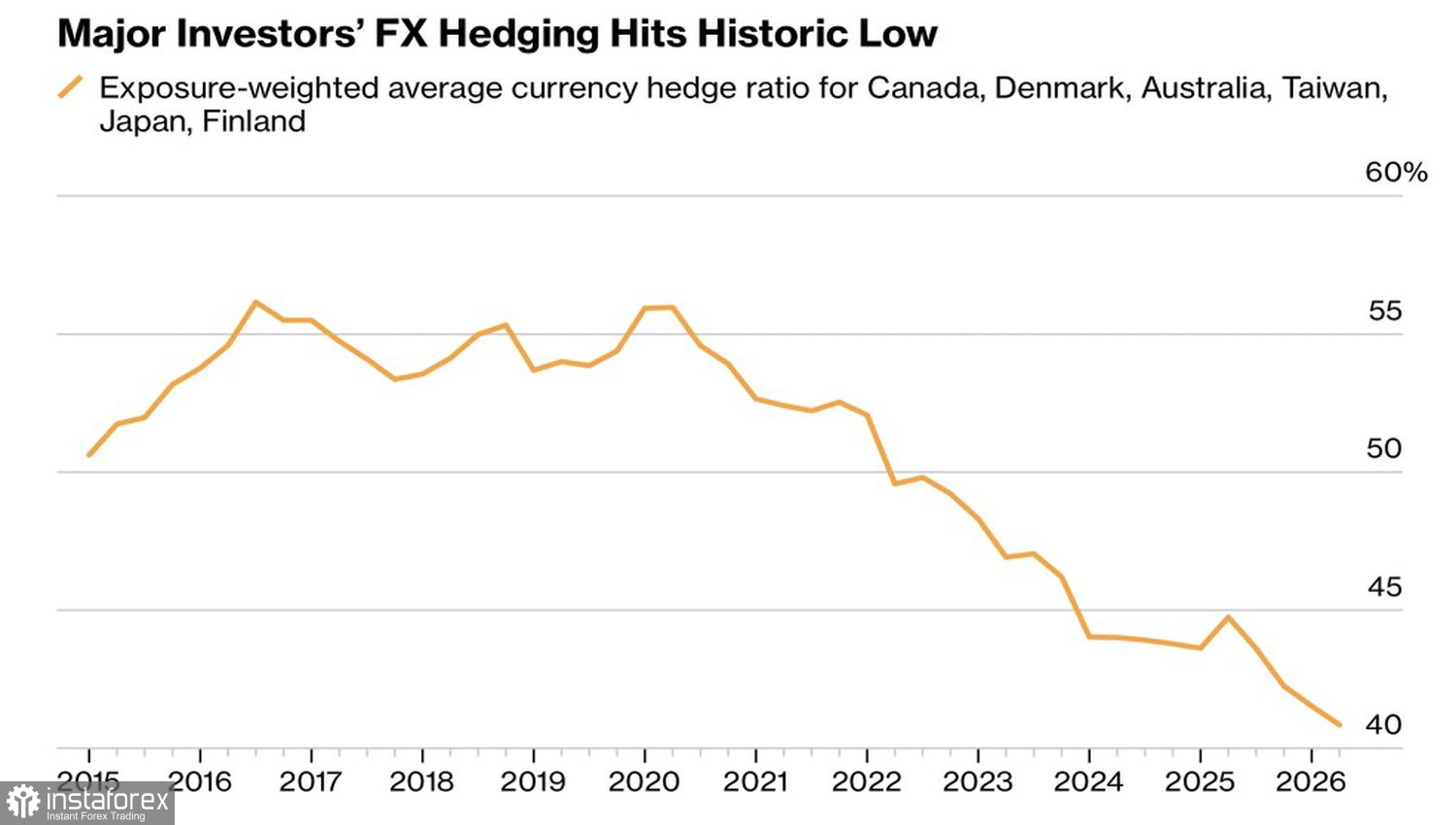
However, there is a second, less obvious reason for the euro's rebound — the dollar itself. Pension funds and insurers worldwide were only 41% hedged against currency risk as of June 30, the lowest level since 2015. Last year's spike in hedging, driven by Donald Trump's tariff shock, has largely faded as the greenback stabilized. That under-hedging leaves the currency vulnerable. If sentiment shifts, the sell?off could be sharper than markets expect.
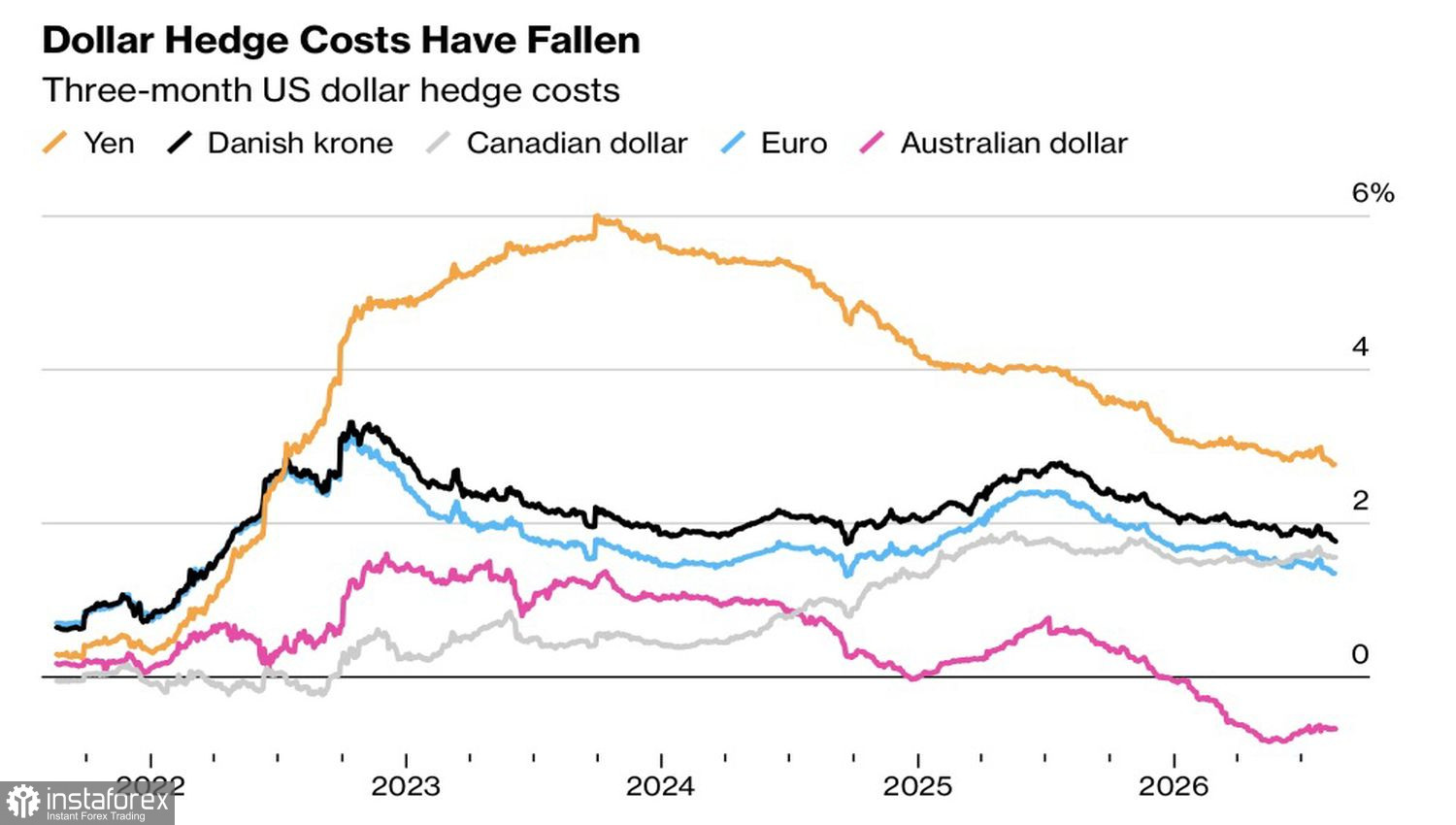
The old playbook — holding the US dollar as a safe haven while saving on hedging costs — is cracking from both sides. The greenback has weakened over the quarter and continues to lose ground across most G10 currencies, and investors are once again talking about a "debasement trade." The Treasury's plans to step up long-term purchases along with intervention in USD/JPY have increased doubts about US authorities' willingness to defend the currency at all costs.
Dynamics of currency risk hedge costs
Adding to the uncertainty is Fed Chair Kevin Warsh's stance. Markets still do not know whether he will press ahead with interest rate hikes while President Trump publicly pushes for cheaper money.
Not everyone, however, believes a full dollar reversal is under way. Credit Agricole remains bearish on EUR/USD, viewing recent strength as collateral damage from geopolitical shocks, from the US–China trade tensions to conflicts in Ukraine and the Middle East, plus election risks in Germany and France. The bank targets 1.13 by year-end before a recovery to 1.17 next year.
For now, the euro's counterattack rests more on the yen's support and under-hedged portfolios than on conviction of a sustained dollar turnaround. Watch Tokyo: the next move by the Bank of Japan could determine the path of global yields faster than any Fed decision.
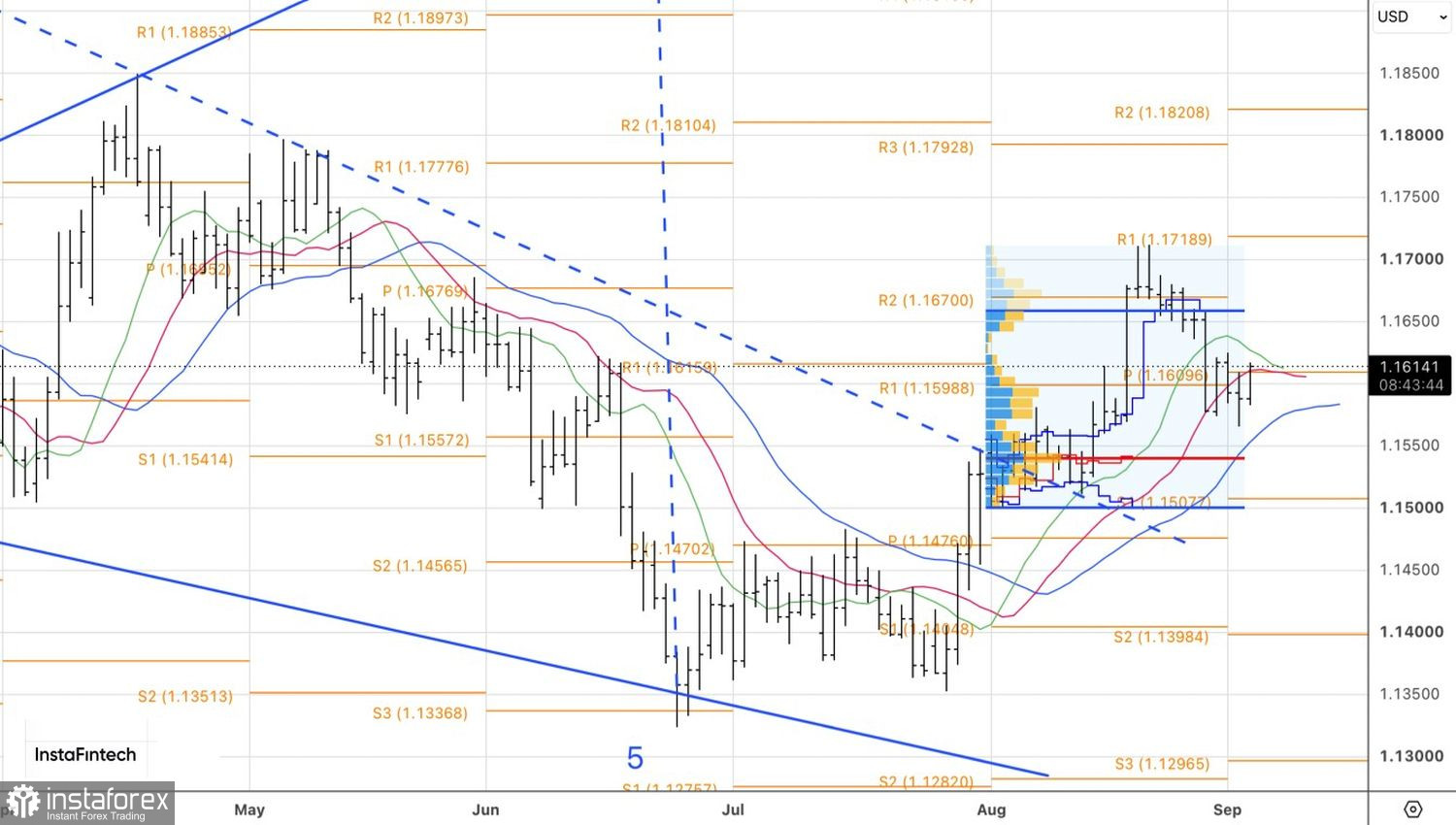
Will the euro hold this bounce, or is it only a breather before another wave of selling?
Technically, the daily chart shows that a retreat from 1.1635, or a drop below 1.1615, would be a trigger to sell.


