
There are a few macroeconomic reports scheduled for Thursday, but there will still be interesting reports. In the UK, data on fourth-quarter GDP, December GDP, and December industrial production will be released in the morning. Overall, it has been a long time since British data have supported the pound sterling. The entire rise in the British currency over the past year has no relation to UK economic data. Therefore, these reports hold less significance for the market. GDP is expected to grow by 0.2% in the fourth quarter on a quarterly basis and by 1.2% year-over-year. Industrial production is likely to show zero growth. In the US, reports on new home sales and unemployment claims will be published today. Yesterday, the market received comprehensive information about the labor market, so the second report is unlikely to pique anyone's interest. As for new home sales, it's not the most important report.
Analysis of Fundamental Events:
Among the fundamental events on Thursday, only a few speeches from representatives of the Federal Reserve and the European Central Bank can be noted. Still, as we mentioned earlier, until new data on inflation, the labor market, and unemployment are released, there is little expectation for a shift in the views of Fed and ECB representatives regarding monetary policy. Data on the labor market was published yesterday, but the issue is that the labor market does not require monetary policy easing, whereas inflation might. Therefore, it is better to conclude further actions from the Fed on Friday.
As for the ECB, Christine Lagarde made it clear last week that inflation must drop significantly below the 2% target for the ECB to begin considering a resumption of monetary easing.
General Conclusions:
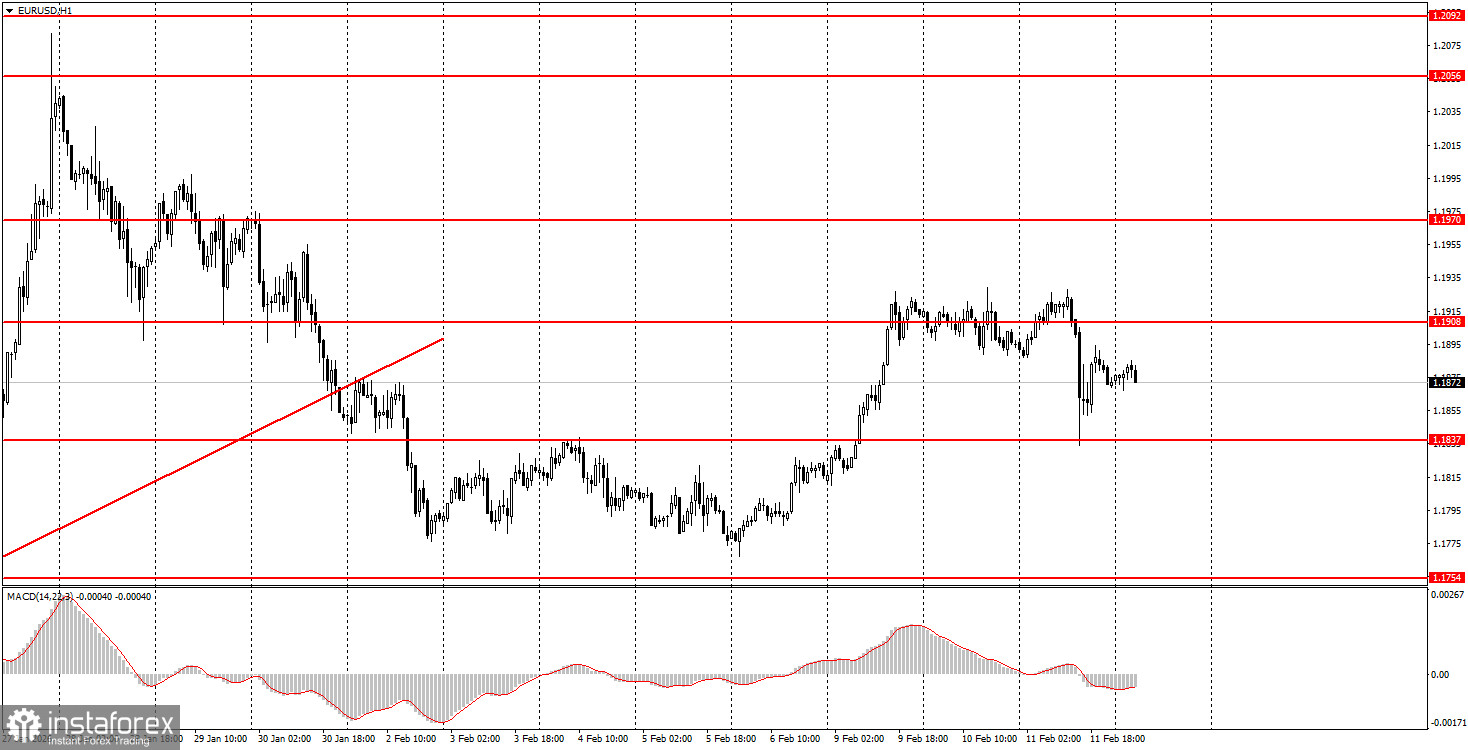
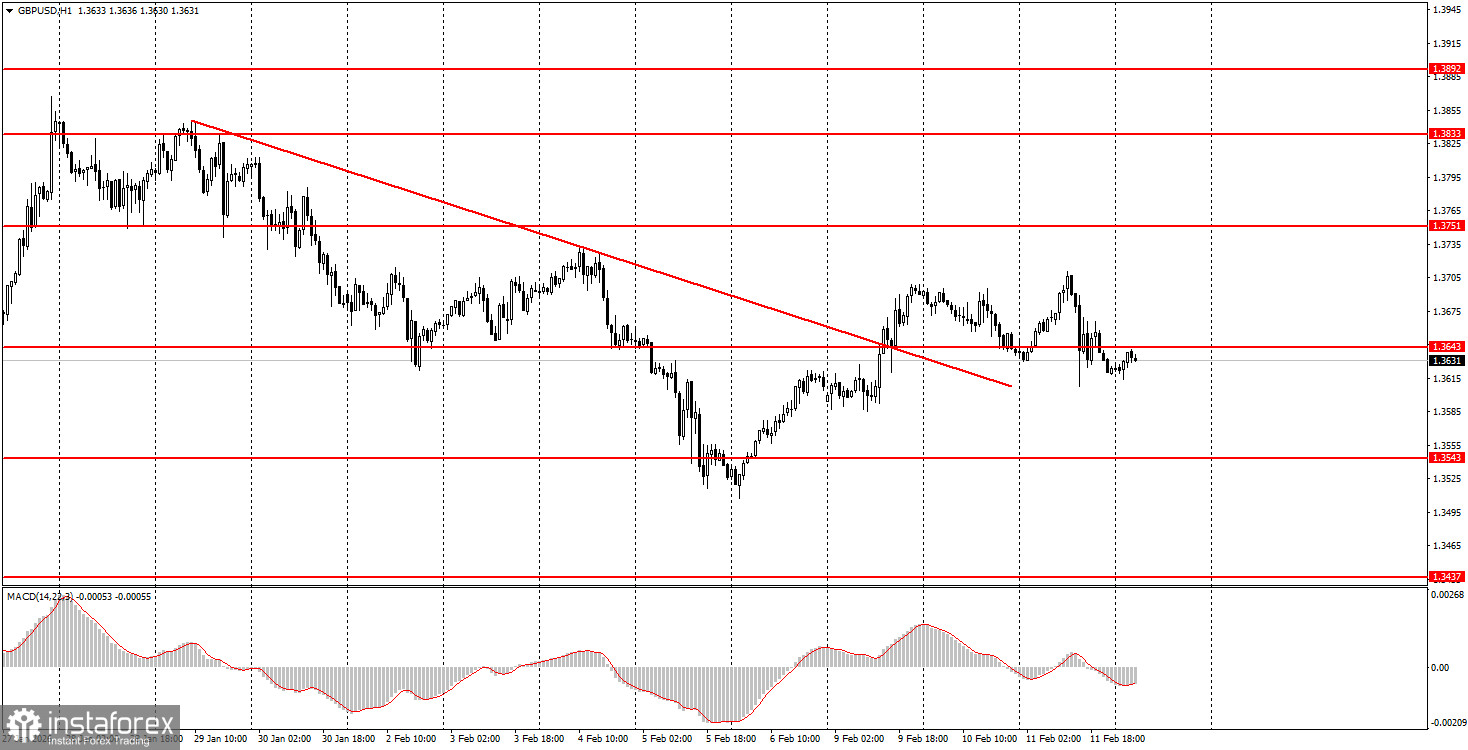
During the penultimate trading day of the week, both currency pairs may trade very calmly, as there will be few important events today. The euro can be traded from the area of 1.1899-1.1908, while the British pound can be traded from the area of 1.3643-1.3652. Today should answer whether the market's attitude toward the dollar has changed in light of fairly strong unemployment and labor market data.
Main Rules of the Trading System:
The strength of the signal is determined by the time it takes to form (rebound or breaking through the level). The shorter the time, the stronger the signal.
If two or more trades were opened around a particular level based on false signals, all subsequent signals from that level should be ignored.
In a flat market, any pair can generate numerous false signals or no signals at all. In any case, it is best to stop trading at the first signs of a flat.
Trades are opened during the time period between the start of the European session and until the middle of the American session, after which all trades should be manually closed.
On the hourly timeframe, signals from the MACD indicator should ideally be traded only when there is good volatility and a trend confirmed by a trend line or channel.
If two levels are too close to each other (ranging from 5 to 20 pips), they should be considered as a support or resistance area.
After moving 15-20 pips in the correct direction, it is advisable to set the Stop Loss to break-even.
What's on the Charts:
Support and resistance levels are targets for opening buy or sell trades. Take Profit levels can be placed around them.
Red lines indicate channels or trend lines that reflect the current trend and indicate the preferred direction for trading now.
The MACD indicator (14,22,3) – the histogram and signal line – serves as a supplementary indicator that can also be used as a source of signals.
Important speeches and reports (always found in the news calendar) can significantly influence the movement of the currency pair. Therefore, during their release, trading should be conducted with maximum caution, or it is advised to exit the market to avoid a sharp price reversal against the preceding movement.
Beginners trading in the Forex market should remember that not every trade can be profitable. Developing a clear strategy and practicing sound money management are the keys to long-term trading success.
You have already liked this post today
*El análisis de mercado publicado aquí tiene la finalidad de incrementar su conocimiento, más no darle instrucciones para realizar una operación.