
Lihat juga


 07.08.2026 04:32 AM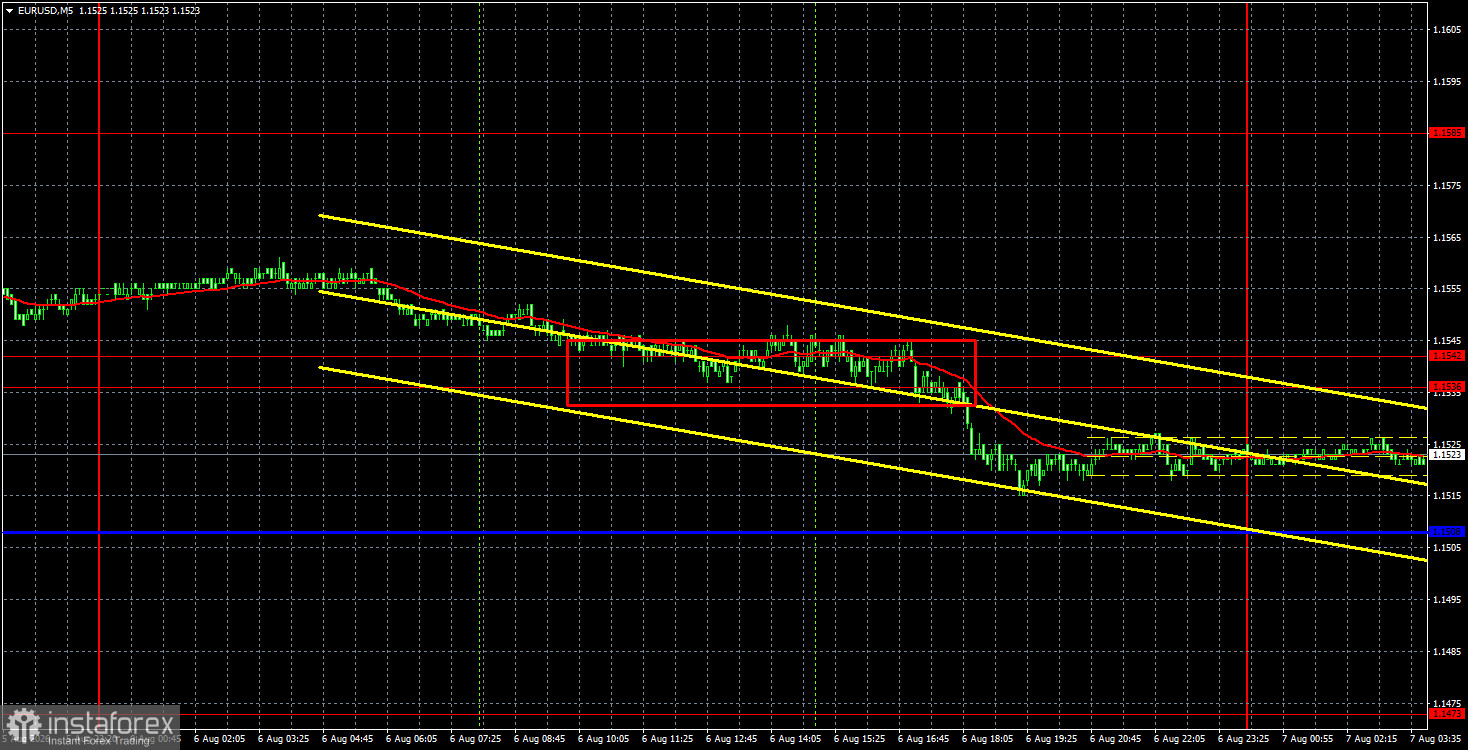
The EUR/USD currency pair on Thursday, August 6, again failed to continue moving upward and retreated. There was consolidation below the 1.1536-1.1542 area and the critical line. However, this is not significant, as movements in the pair today and perhaps in the near future will depend on US labor market and unemployment data, which will be released today. It's reasonable to expect that, in the case of strong data, we can see a substantial rise in the US dollar and a drop in the EUR/USD pair. If the data is weak, the European currency will have the opportunity to continue a justifiable rise. Therefore, the dollar's fate hinges on today. It's important to remember that weak Non-Farm Payrolls and unemployment data are not merely negative reports. They will significantly diminish the likelihood of seeing at least one tightening of the Federal Reserve's monetary policy this year. Tightening that the market began pricing in two months ago, following Kevin Warsh's first meeting at the helm of the Fed. There have been hardly any interesting movements this week. The market did not ignore the important ISM indices, but the reaction was extremely weak. The market has shown all week that it is not interested in business activity; it is focused on the labor market.
From a technical viewpoint, the pair has exited the sideways channel of 1.1362-1.1461 after a month of "struggling." Traders are now entitled to expect not just an upward trend but a full-fledged trend. This week has not seen any actual rise in the euro, but volatility could be high today, and reports on the labor market and unemployment will dictate the dollar's dynamics in the near future.
On the 5-minute timeframe, only one trading signal was generated on Thursday. During the US trading session, the price consolidated below the 1.1536-1.1542 area, allowing traders to open short positions. Due to low volatility, we did not see any meaningful downward movement, and today's movements will not depend on technical factors.
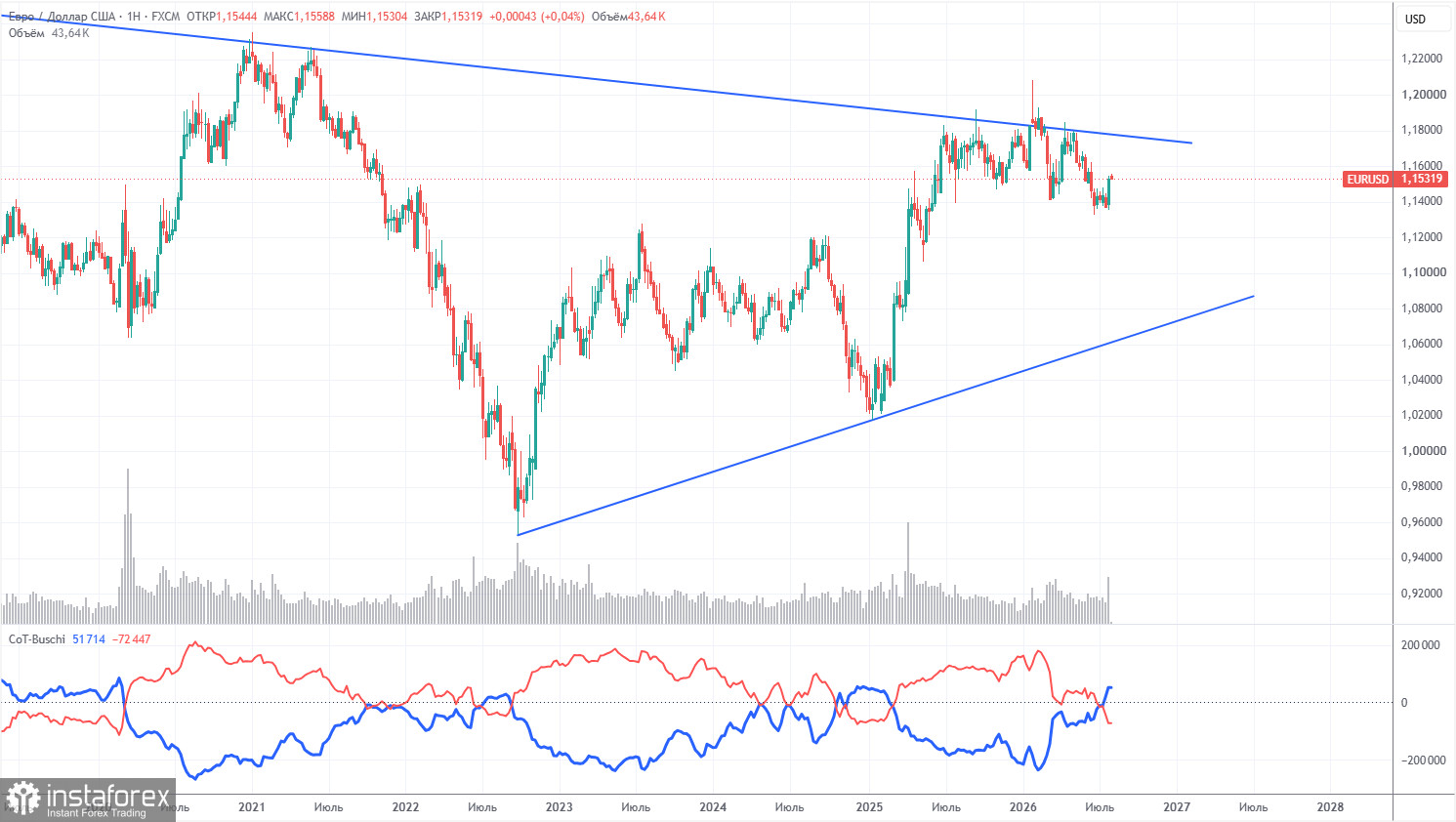
The latest COT report is dated July 28. The illustration of the weekly timeframe clearly shows that the net position of non-commercial traders has turned "bearish" and has significantly decreased in 2026 due to geopolitical events. Traders have been shedding the European currency in favor of the US dollar in recent months. Donald Trump's policies have not changed, but the dollar has temporarily served as a "reserve currency."
We still do not see any fundamental factors to strengthen the euro, but there remain sufficient factors for the dollar's decline. The war in the Middle East has made the dollar temporarily super-attractive, but once this factor reaches its "expiry date," everything will revert to normal. In the long term, the euro could decline to the level of $1.08 (the trend line), but the upward trend will still remain relevant. Over the past months of the dollar's growth, the pair has not come very close to this line.
The positioning of the red and blue lines of the indicator indicates parity between bulls and bears. During the last reporting week, the number of long positions in the "Non-commercial" group decreased by 15,500, while the number of shorts increased by 15,600. As a result, the net position fell by 31,100 contracts over the week.
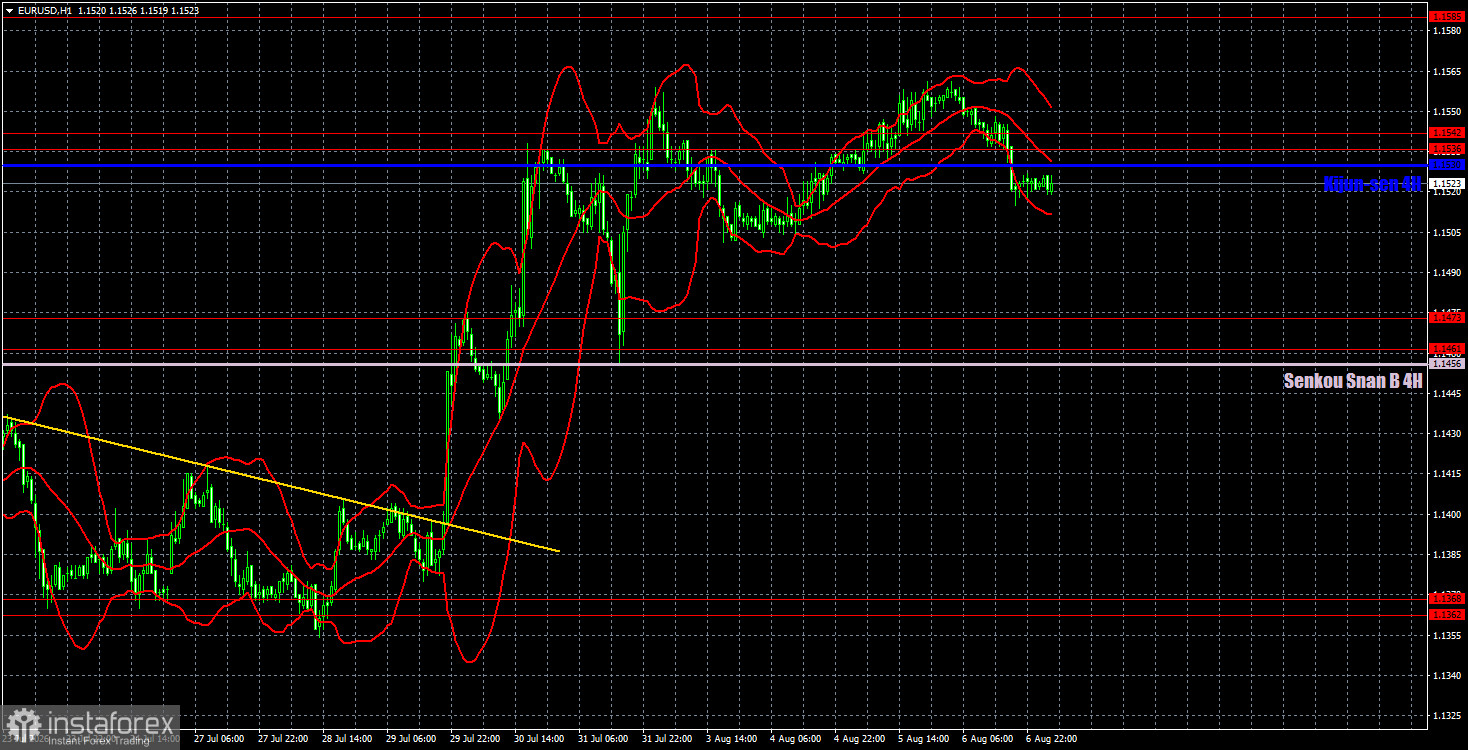
On the hourly timeframe, the pair has resumed an upward trend after a month-long pause. The situation in the Middle East remains tense and is not improving, but this is no longer enough to trigger a new substantial rise in the dollar. The market has largely ignored the positive factors for the euro in recent months. It has been fixated solely on the Fed's monetary policy, to which it has held excessively high expectations. Now, however, the veil is lifting from traders' eyes, which means the European currency has a good chance of medium-term growth.
On August 7, we identify the following levels for trading: 1.1234, 1.1274, 1.1362-1.1368, 1.1461-1.1473, 1.1536-1.1542, 1.1585, 1.1657-1.1666, 1.1750-1.1760, 1.1786, 1.1830-1.1837, as well as the Senkou Span B line (1.1456) and the Kijun-sen line (1.1530). The Ichimoku indicator lines may shift throughout the day, which should be considered when determining trading signals. Do not forget to set a stop-loss order to break even if the price moves in the right direction by 15 pips. This will protect you from potential losses if the signal proves false.
On Friday, the economic calendar in the European Union is empty, and a few totally secondary reports will be released in Germany. At the same time, in the US, the Non-Farm Payrolls and unemployment levels will be published—those reports the market has been waiting for all week, if not longer.
Today, traders may maintain short positions with a target of 1.1461-1.1473, as the pair has settled below the 1.1536-1.1542 area and the critical Kijun-sen line. A consolidation above the 1.1536-1.1542 area will allow for long positions with targets at 1.1585 and 1.1657-1.1666.


