
Lihat juga


 29.12.2025 12:41 AM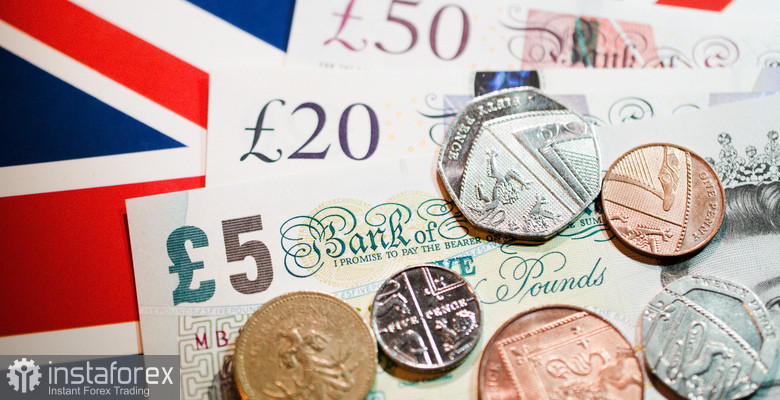
The situation for the British pound is identical to that of the euro. Next week in the UK, only one report will be released—the final assessment of the manufacturing sector's business activity index for December, scheduled for Friday. It is difficult for me to gauge how important this index will be for market participants on January 2, considering that the market will be closed on January 1 and will close again for the weekend on January 3. In my opinion, this report may go unnoticed. No other events are expected in the UK.
One might hope for developments from America and the dollar, but they also enjoy celebrating the New Year and taking holidays. Therefore, wave analysis is the only type of analysis that can offer some guidance on what to expect. However, it is essential to note that we should not expect much in any case. Given that next week is holiday-filled, market activity will be minimal, and the amplitude of movements will be even lower. Thus, it is not particularly important where or by how much the instrument will move over the next four trading days. It is better to focus immediately on January 5, when the market resumes operations, participants will have "recovered" from the holidays, and economic data will start to emerge in the Eurozone, the UK, and the US.
Based on the conducted analysis of EUR/USD, I conclude that the instrument continues to build the bullish segment of the trend. Donald Trump's policies and the Fed's monetary policy remain significant factors in the long-term decline of the American currency. The targets of the current trend segment may extend up to the 25th figure. The current upward wave pattern is developing, and we hope we are now witnessing the formation of an impulse wave set that is part of global wave 5. In this case, we should expect growth towards targets around 1.1825 and 1.1926, corresponding to 200.0% and 261.8% on the Fibonacci retracement.
The wave structure of the GBP/USD instrument has changed. The downward corrective structure a-b-c-d-e in C of 4 appears to be complete, as does the entire wave 4. If this is indeed the case, I expect the primary trend segment to resume its development, with initial targets around the 38 and 40 levels.
In the short term, I anticipated the formation of wave 3 or c, with targets around 1.3280 and 1.3360, corresponding to 76.4% and 61.8% of the Fibonacci retracement. These targets have been reached. Wave 3 or c continues its formation, and currently, a fourth attempt to break the 1.3450 mark (equivalent to 61.8% on the Fibonacci retracement) is underway. Movement targets are 1.3550 and 1.3720.


