
यह भी देखें


 22.04.2026 12:48 AM
The export of oil and gas from Middle Eastern countries has been disrupted for almost two months now. During this time, the global economy has missed out on around 500 million barrels of oil, amounting to approximately $50 billion. Economists believe the repercussions of the conflict will be felt for many months, if not years.
However, for the average person, it is challenging to grasp what 500 million barrels of oil actually represents. Therefore, experts offer several compelling comparisons to illustrate the scale of what is not just a disaster, but a serious energy crisis. For instance, 500 million barrels of oil is enough fuel for all the airplanes on the planet for 10 days, gasoline for all the cars on the planet for 11 days, or a month's consumption for the US or Europe.
Meanwhile, the Strait of Hormuz remains blockaded, and the outcome of the negotiations, supposedly set for tomorrow, remains unknown. Consequently, each additional 10 days of conflict will limit the global economy's access to an additional 100 million barrels of oil, valued at approximately $10 billion. Even if the Strait of Hormuz is unblocked soon, it will not entirely eliminate the energy supply deficit. The restoration of the damaged oil and gas infrastructure in the Middle East will, by the most conservative estimates, take several months. Global strategic oil reserves have already decreased by 45 million barrels. Thus, in the near future, oil reserves will continue to decline, the oil deficit will remain, and improvements in the situation can be expected no earlier than winter 2026.
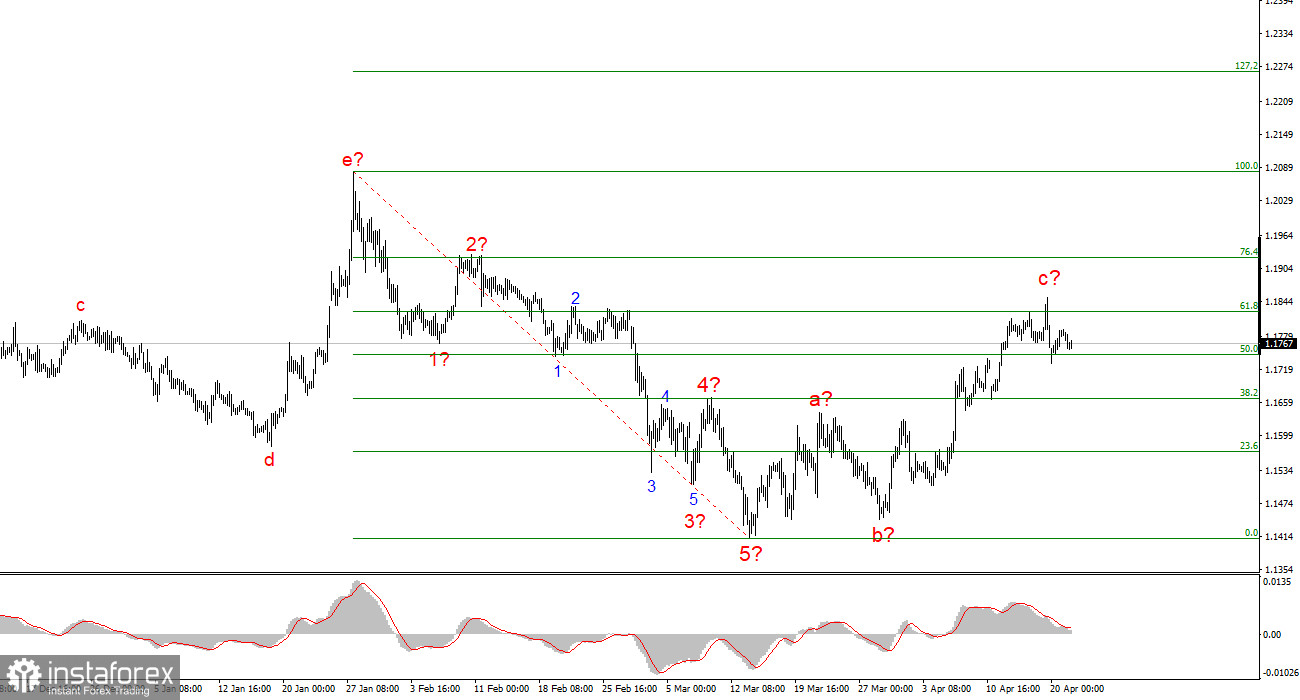
Based on the analysis of EUR/USD, I conclude that the instrument remains in the bullish segment of the trend (as indicated in the lower image) and, in the short term, is in a corrective structure. The corrective wave set appears quite complete and may take a more complex, extended form only if a stable and long-term ceasefire is established between Iran, the US, Israel, and ALL other countries in the Middle East. Otherwise, I believe that, from current positions, a new bearish wave set may be forming. Or at least a corrective wave.
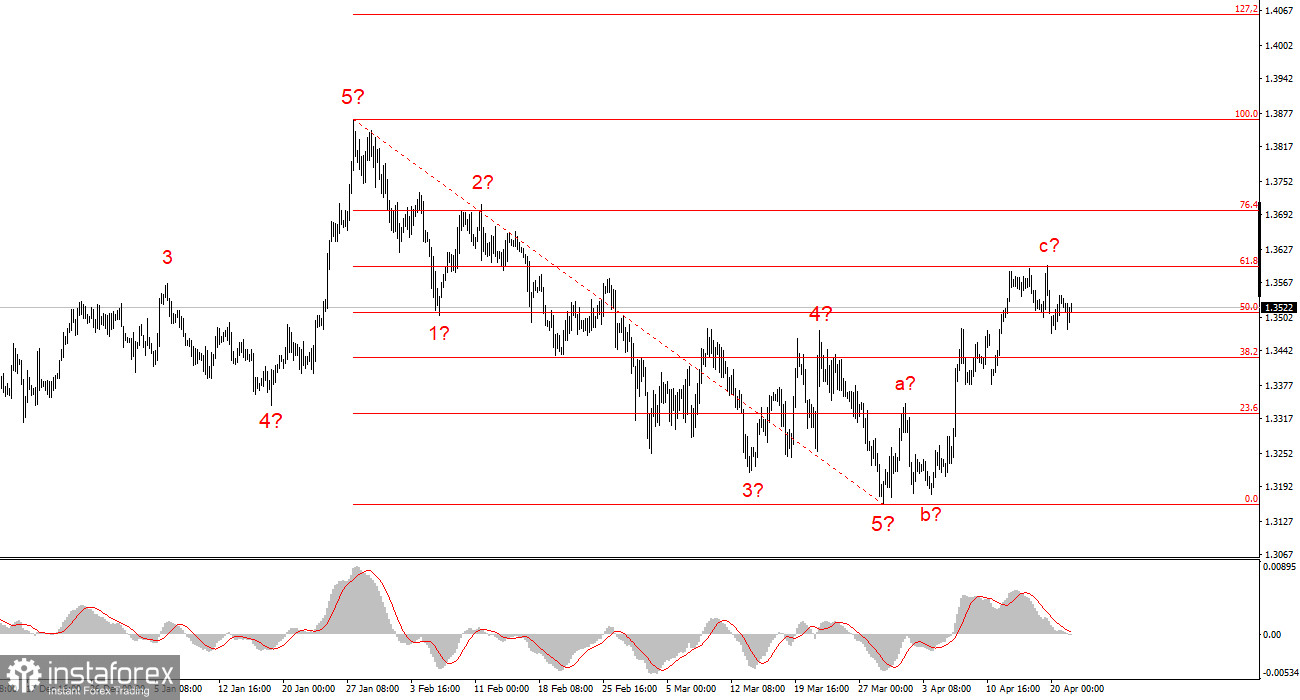
The wave picture for the GBP/USD instrument has become clearer over time, as I suspected. We now see a clear three-wave upward structure on the charts that may already be completed. If this is indeed the case, we should expect the formation of at least one descending wave (presumably wave d). The upward trend section may take on a five-wave form, but for this to happen, the conflict in the Middle East needs to cool down rather than reignite. Therefore, the base scenario for the coming days is a decline into the area of the 34th figure or slightly below. After that, everything will again depend on geopolitical factors.

