
यह भी देखें


 24.12.2025 12:32 AM
The Australian dollar, paired with the US dollar, has hit a two-month high amid the greenback's overall weakening. For the first time since September this year, the AUD/USD pair tested the 67 level, rising more than 100 pips over two days. Notably, the pair is rising not only amid the decline in the US dollar index but also amid the strengthening of the Aussie. For example, the minutes from the Reserve Bank of Australia meeting provided additional support for the Aussie, driving it higher across the market.
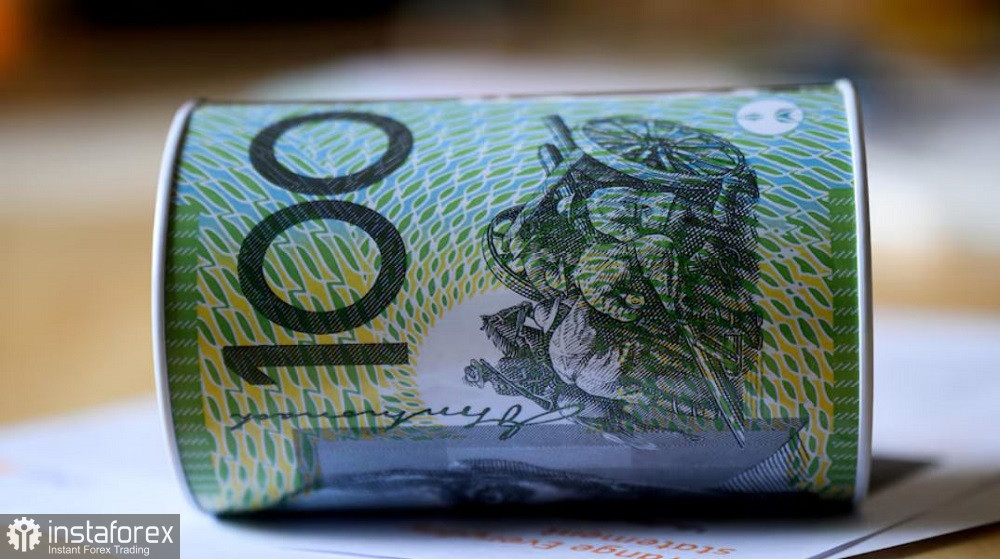
To briefly recap, the RBA, following its last meeting of the year, kept all monetary policy parameters unchanged and adopted a "hawkish" tone, for the first time allowing the possibility of tightening policy. According to the central bank's governor, Michelle Bullock, the baseline forecast now implies a prolonged pause or an increase in interest rates.
Following the outcomes of the December meeting, the market revised its forecasts for the RBA's future actions. Prior to the meeting, the market assumed only the scenario of maintaining the status quo, but now the rate hike option is among the main scenarios. For example, the probability of an interest rate hike at the RBA's January meeting stands at 30%, while the likelihood of a rate increase in the first half of 2026 is nearly 100%. This suggests that the market is confident that inflation in Australia will continue to accelerate, pushing the RBA towards hawkish decisions.
The release of the RBA minutes only added fuel to the fire. It was revealed that the Bank discussed raising interest rates next year amid increased risks of sustained inflation. Board members acknowledged that inflation risks have risen, so "at some point," the central bank may resort to tightening monetary policy. When this moment may occur is unknown, but according to many analysts, two releases will play a crucial role: the report on CPI growth for the fourth quarter of 2025 (scheduled for release at the end of January) and the report on CPI growth for the first quarter of 2026 (expected at the end of April). If the consumer price index remains at its current level or (even more so) continues to accelerate, the RBA will implement its "threat" and tighten monetary policy at the May meeting.
It should be noted that hawkish rumors emerged in the market following the release of third-quarter inflation data. The overall CPI rose to 1.3% quarter-on-quarter, marking its highest level since early 2023, after rising by 0.7% in the previous quarter. Year-on-year, the overall CPI increased to 3.2%, the highest value since the second quarter of last year. The averaged CPI, the most accurate indicator of sustained price trends (as it excludes the most volatile components), rose to 3.0% in the third quarter, after reaching 2.7%, landing at the upper boundary of the target range.
After this publication, the RBA significantly tightened its rhetoric, allowing AUD/USD buyers to launch a renewed advance. The pair is within an upward trend amid the potential widening divergence in monetary policy between the Federal Reserve and the RBA.
In this context, traders' reactions to the disappointing Australian labor market report released the week before are telling. The total number of people employed in Australia unexpectedly fell by more than 20,000, contrary to optimistic forecasts (most analysts predicted a 20,000 increase). Meanwhile, the full-time employment indicator plummeted to -56,500, while part-time employment rose by 35,000.
At first, the AUD/USD pair reacted negatively to the release, but buyers quickly regained all lost positions, and subsequently (i.e., on Tuesday) updated the two-month price high. The hawkish stance of the RBA is supporting the Aussie amid dovish signals from the Fed.
In other words, the prevailing fundamental backdrop favors further growth of AUD/USD, so price corrections should be used to open long positions.
The technical analysis supports this view. On all higher timeframes (from H4 and above), the pair is either at or between the middle and upper lines of the Bollinger Bands indicator. On the H4, D1, and W1 timeframes, the price is also above all lines of the Ichimoku indicator, which has formed a bullish "Parade of Lines" signal on the four-hour and daily charts. The first target for the upward movement is the 0.6720 mark (the upper Bollinger Bands line on D1). The primary medium-term target is 0.6770 (the lower boundary of the Kumo cloud on the MN timeframe).

