
আরও দেখুন


 20.07.2026 02:40 PM
You can't have it both ways. Yet that's exactly what the major currency pair is trying to do, stuck in a narrow range while awaiting the European Central Bank's verdict. No one expects a deposit rate hike, but Christine Lagarde could well hint at tighter policy later this year. The problem for EUR/USD is that its fate is not being decided in Frankfurt but in Washington.
Traders and Fed Chair Kevin Warsh agree on one thing: the fight against inflation is far from over. June's decline in US consumer prices — the first monthly drop since 2020 — briefly cheered markets and led them to unwind bets on an imminent rate increase. But the respite proved temporary and, apparently, deceptive. Oil is rising again after the fragile US–Iran truce collapsed, AI spending is continuing to accelerate the economy, and Warsh has signaled that the Fed's priority is to bring inflation back to the 2% target from which it has been deviating for five years.
Traders' consensus on funds rate
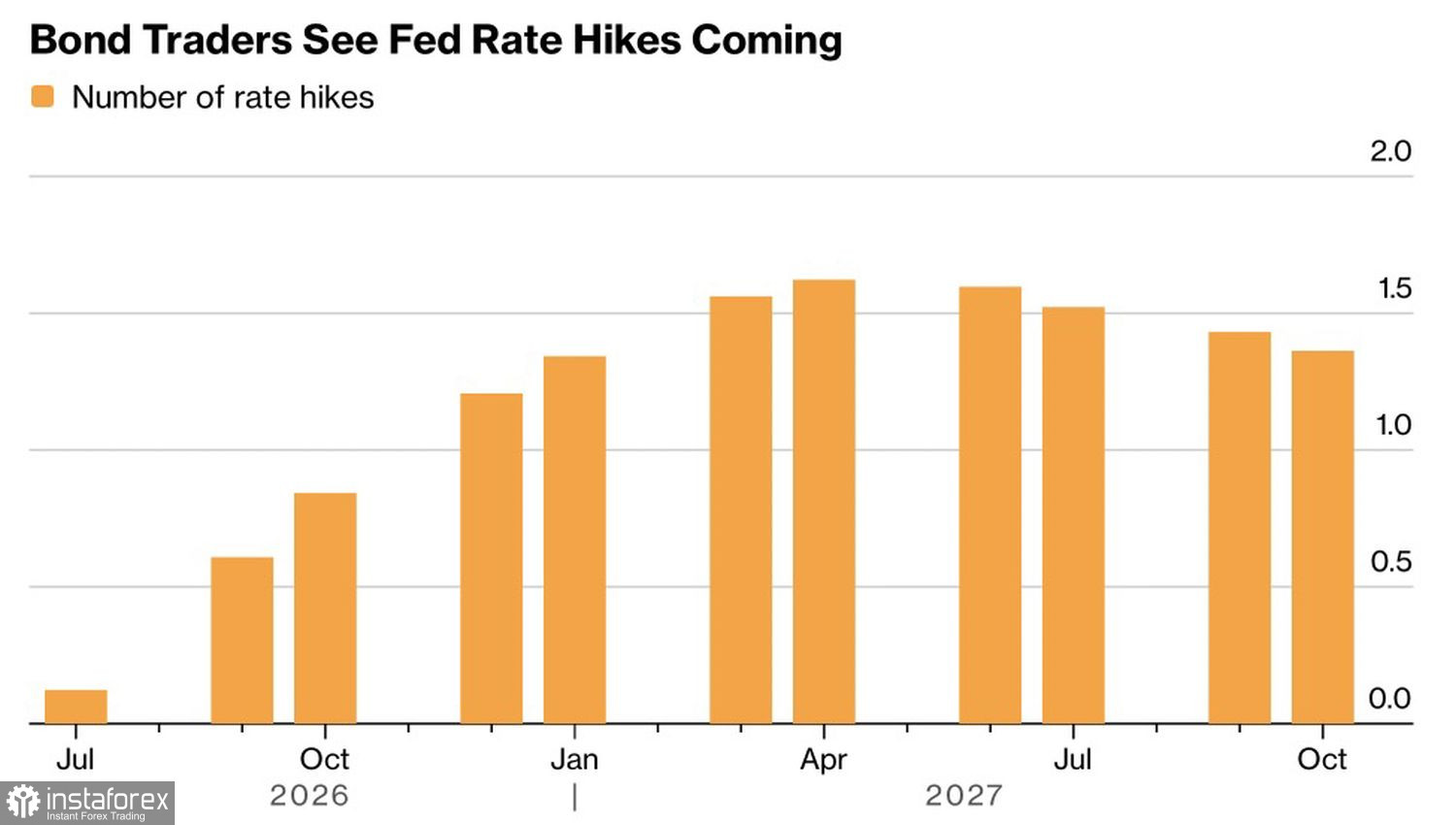
Goldman Sachs expects the Fed to hold rates at 3.50–3.75% through the end of 2026, while the ECB will add another 25 bps in September, taking borrowing costs to a peak of 2.5% before easing in 2027.
Bank of America is more hawkish, anticipating a 75-bp rate hike by the Federal Reserve as early as September, dismissing clients' views that inflation is transitory. BofA believes Kevin Warsh has strategic reasons to act quickly and to build a reputation as an inflation fighter. BlackRock, by contrast, sees the market as overly hawkish and expects the Fed to hold off on hikes until data soften.
Funds rate and US Treasury yield dynamics
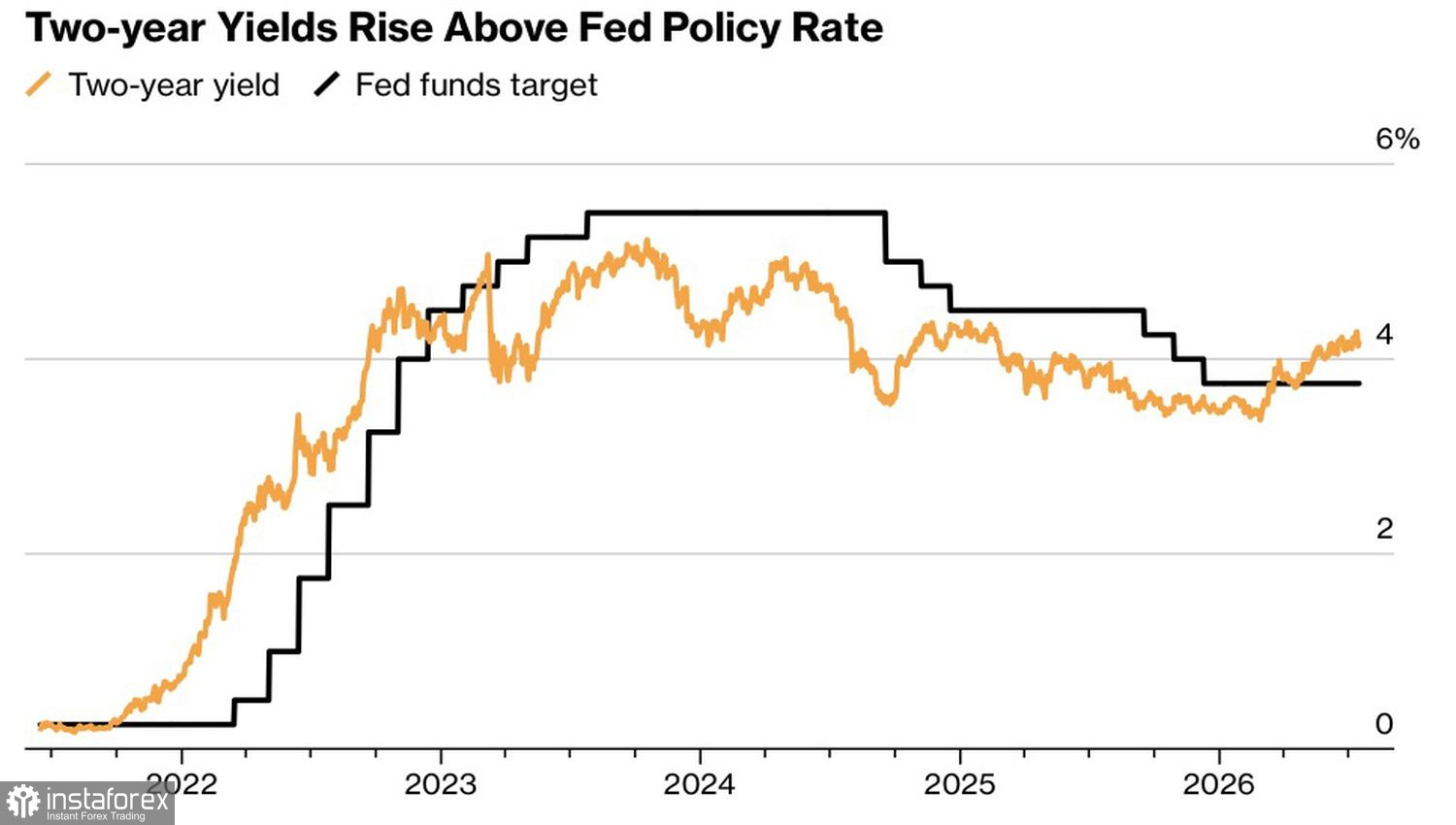
While traders debate the pace of monetary tightening, the euro faces another headache. German Chancellor Friedrich Merz fears that a Marine Le Pen victory in France's 2027 presidential election would shatter the Franco-German tandem and shake the European project. Her arrival at the Elysee Palace would be seen as a triumph of the continent's far right. Some experts, however, urge Berlin and Paris to focus on shared problems — sluggish growth and weakening competitiveness — rather than erecting political barricades.
Thus, EUR/USD finds itself between two examiners. One is the Federal Reserve, whose decisions will determine the pair's trajectory in the coming months. The other is French voters, whose verdict next year will shape the euro's much more distant future. Which of these tests will prove harder for the currency?
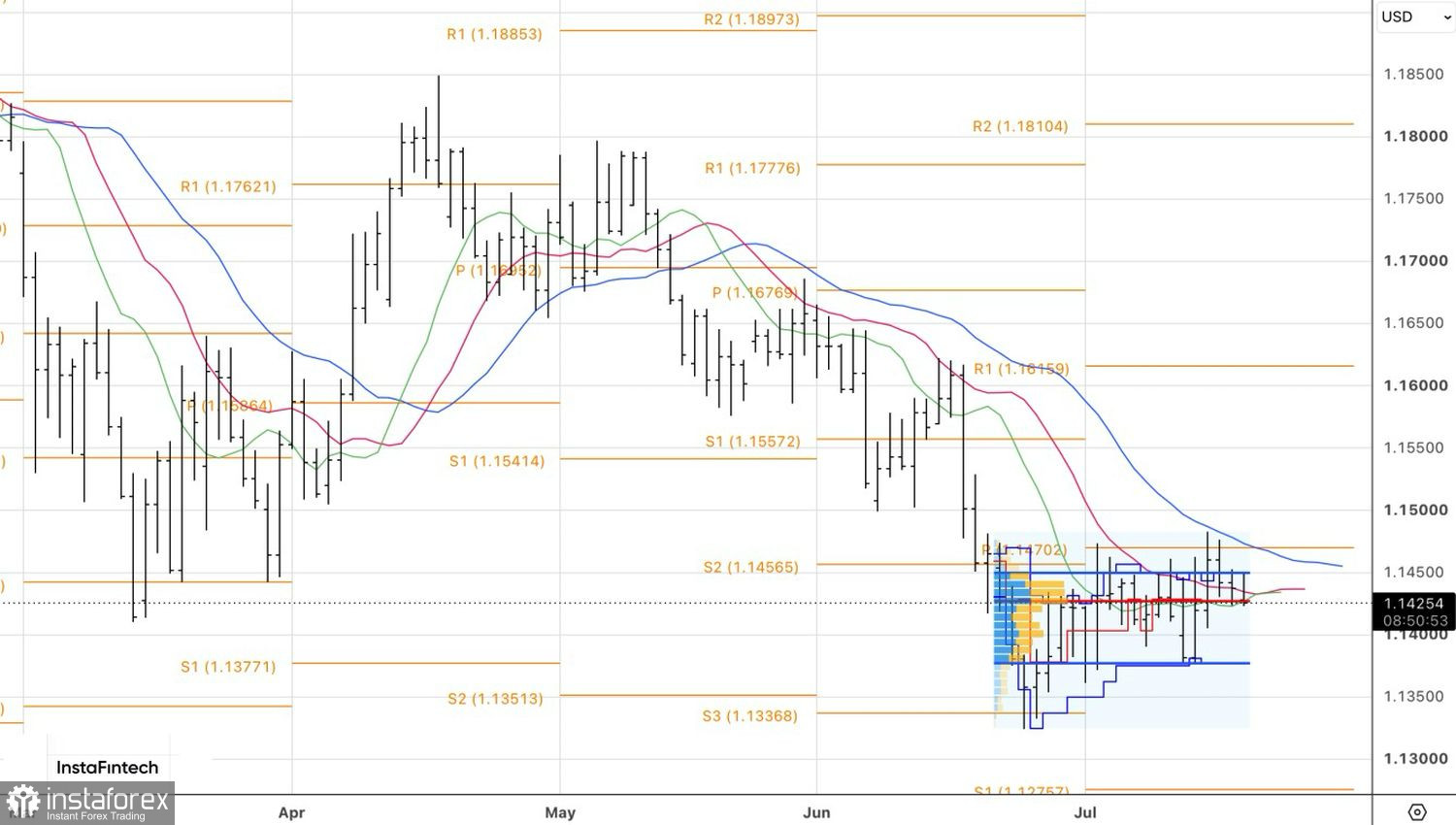
Technically, on the daily chart, EUR/USD is oscillating between the upper band of the 1.1375–1.145 range and fair value. Emphasis should remain on range trading — buying the euro on dips and selling on rallies against the US dollar. A break of 1.1425 would increase the risk of the currency pair sliding toward the range's lower band.


