
আরও দেখুন


 13.05.2026 01:34 PM
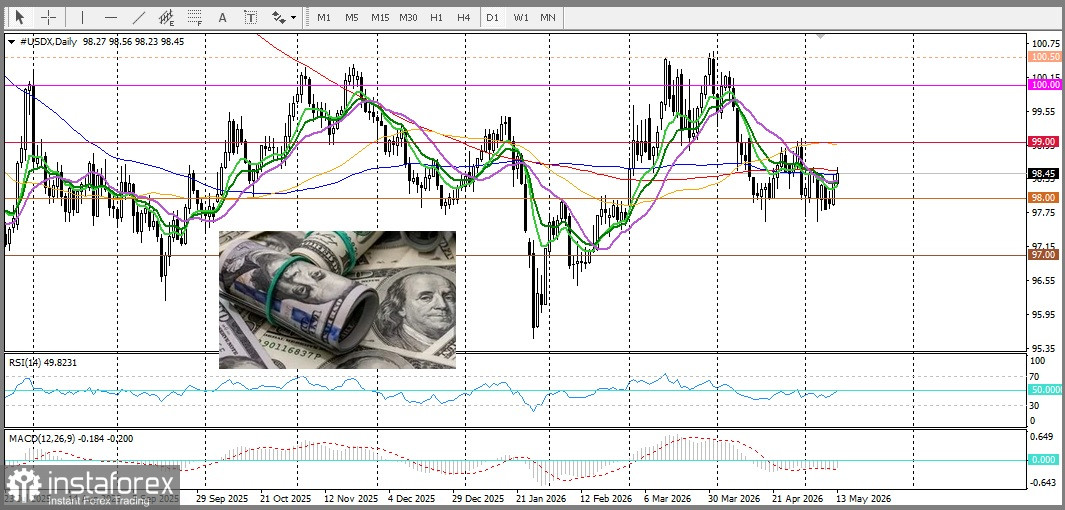
On Wednesday, gold (XAU/USD) is showing moderately negative dynamics, attempting to hold above the psychological $4,700 level, though without clear dominance from sellers. US inflation data published on Tuesday exceeded market expectations and strengthened investor confidence in further monetary tightening by the Federal Reserve. At the same time, ongoing geopolitical tensions contributed to the strengthening of the US dollar, which reached its highest level in more than a week, putting pressure on precious metal prices for a second consecutive day.
Market participants reacted quickly: the probability of an interest rate hike by the end of the year is now estimated at around 35%. Additional pressure comes from expectations of further inflation growth amid high oil prices, which in turn are supported by strained relations between the United States and Iran. This has led to higher U.S. Treasury yields: yields on 30-year bonds briefly reached the 5.0% mark, approaching yearly highs, while two-year Treasury yields, which are sensitive to interest rate changes, remain near the 4% level. Such dynamics strengthen the U.S. dollar while simultaneously reducing the attractiveness of gold as a non-yielding asset.
Against this backdrop, prospects for a peace agreement between the U.S. and Iran have deteriorated further after President Donald Trump stated that the ceasefire remains extremely unstable and is effectively "hanging by a thread." Iran, for its part, rejected the U.S. proposal for resolving the conflict, which has now continued for more than two months amid disagreements over the nuclear program and the strategic standoff surrounding the Strait of Hormuz. Ongoing geopolitical tensions support the dollar's status as the world's key reserve currency and increase short-term pressure on precious metal prices. At the same time, the absence of strong follow-through selling calls for caution when opening new short positions after the corrective decline from Tuesday's three-week high.
Market participants appear to be taking a wait-and-see approach ahead of the two-day talks between U.S. President Donald Trump and Chinese President Xi Jinping. Today, to identify better trading opportunities, attention should be focused on the publication of the U.S. Producer Price Index (PPI) and developments on the geopolitical front, both of which could determine the short-term direction for the dollar and gold prices.
From a technical perspective, yesterday's pullback from the $4,765–$4,770 level stalled at the psychological $4,700 level, which coincides with the 20-day SMA and is acting as immediate support. This indicates continued buying interest on dips despite the current consolidation phase. Oscillators remain mixed: the RSI (Relative Strength Index) is neutral, indicating balanced forces between bulls and bears. The MACD histogram is also approaching neutral territory. This configuration reflects stabilization of momentum rather than the formation of a sustained trend. In this context, it would be reasonable to wait for confirmation in the form of active buying and a confident breakout above the $4,770 resistance level before considering a continuation of the upward scenario. Alternatively, traders should wait for a break below the 20-day SMA before looking to sell gold.


