*) see also: InstaTrade Trading Indicators for XAU/USD
In Thursday's Asian session, the US dollar strengthened, and precious metals fell sharply, reflecting a combination of easing geopolitical tensions and shifting expectations for Federal Reserve monetary policy.
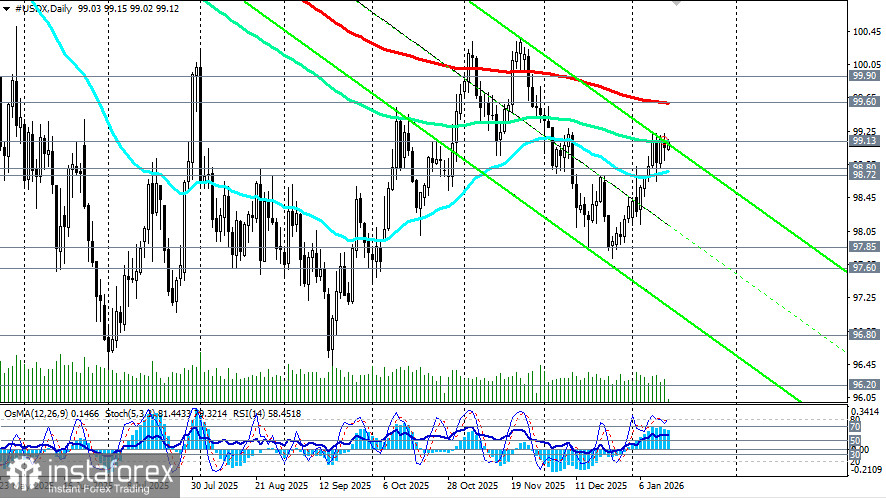
- The Dollar Index is attempting to break the resistance level 99.13 for the fifth consecutive day (EMA144 and the upper line of the descending channel on the daily chart). The US dollar shows resilience, supported by strong macro data released earlier in the week. Retail sales in November rose by 0.6% (after a 0.1% decline in October), exceeding expectations. The Producer Price Index (PPI) also rose to 3.0% year-on-year, indicating persistent price pressure.
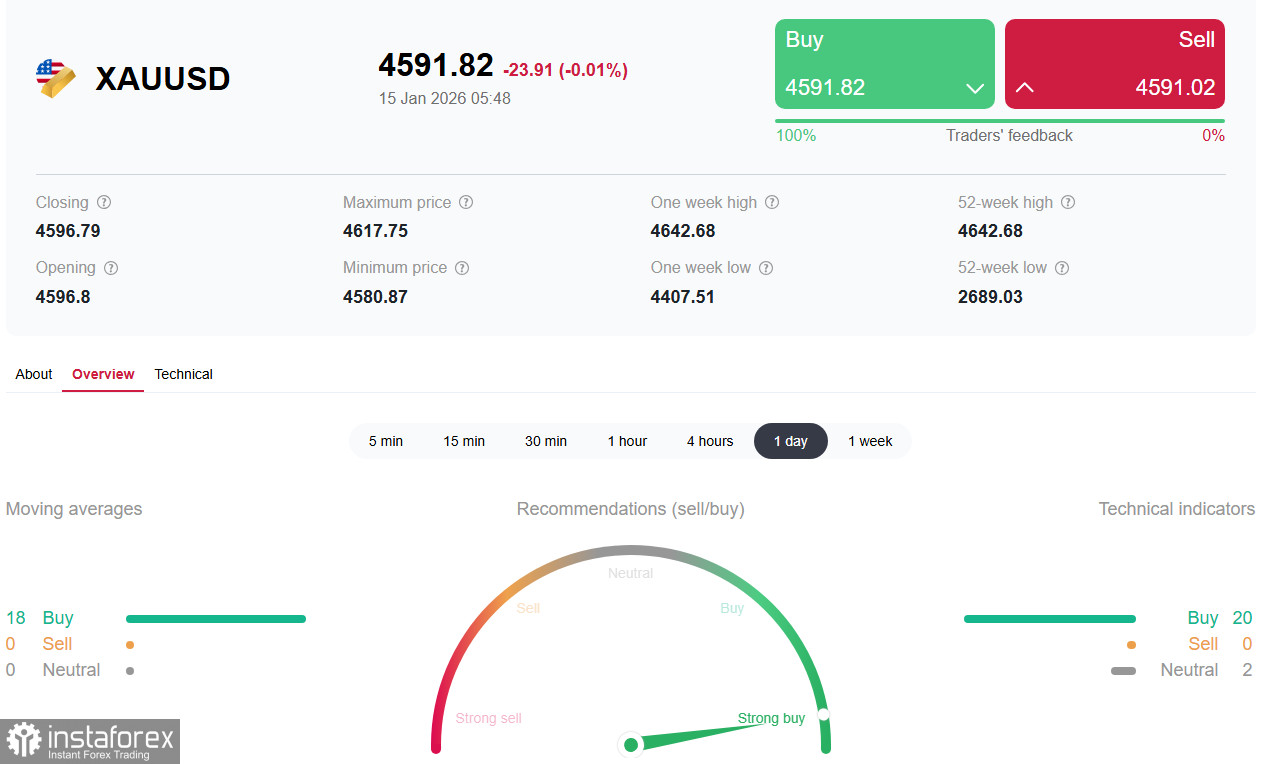
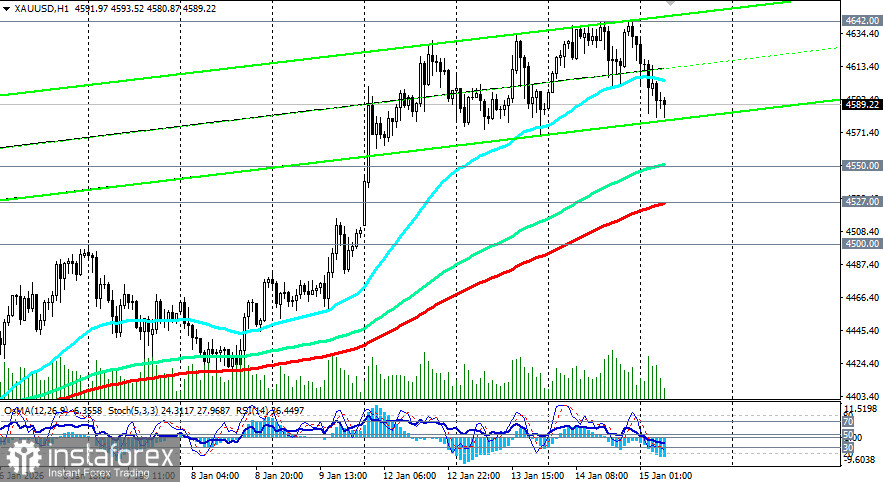
- Gold, by contrast, corrected by about 1%, retreating from the all-time high of 4,642.00 USD/oz to around 4,582.00.
- Silver suffered even more, losing over 8%, amid expectations of tighter monetary policy.
The main factors of the decline were:
- Easing of geopolitical risks: Iran gave the US guarantees to stop executions of civilians, which reduced demand for gold as a safe-haven asset.
- Strong US data and Fed commentary point to a high probability that policy rates will remain unchanged in the coming months. The CME FedWatch tool prices the probability of a rate cut in January at only 5%.
Key influencing factors
- Fed monetary policy. Markets are revising expectations. Economists have pushed back forecasts for the first rate cut to June and September. Fed speakers (Kashkari, Bostic, and others) emphasize the economy's resilience and still-elevated, though slowing, inflation.
- Geopolitics. The Iran situation remains in focus. Despite a temporary easing after Trump's statements, the threat of new sanctions (25% tariffs on countries trading with Iran) and potential military action keeps uncertainty alive.
- Inflation data. Core CPI in December rose 0.2% month-on-month, with annual core inflation remaining at 2.6%, signaling a slowdown. However, headline PPI and retail sales remain strong.
- Labor market. Unemployment in December fell to 4.4%, and wage growth accelerated to 3.8% year-on-year, supporting consumer demand.
Technical picture and prospects
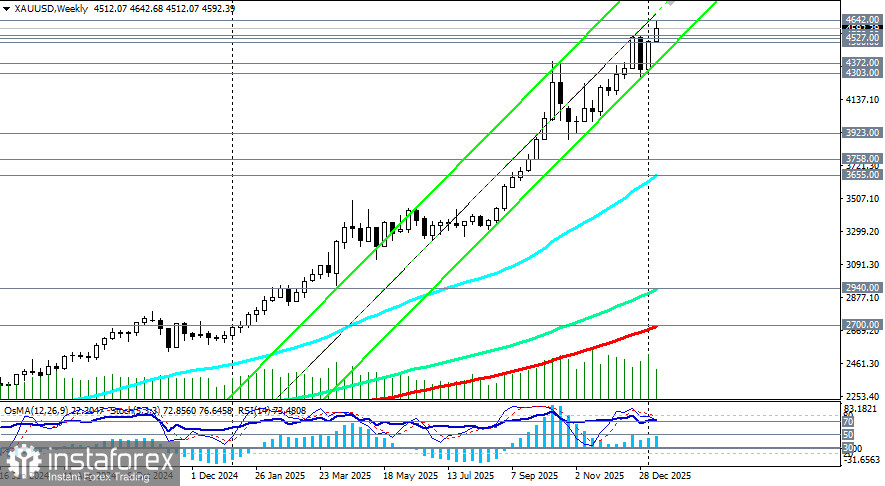
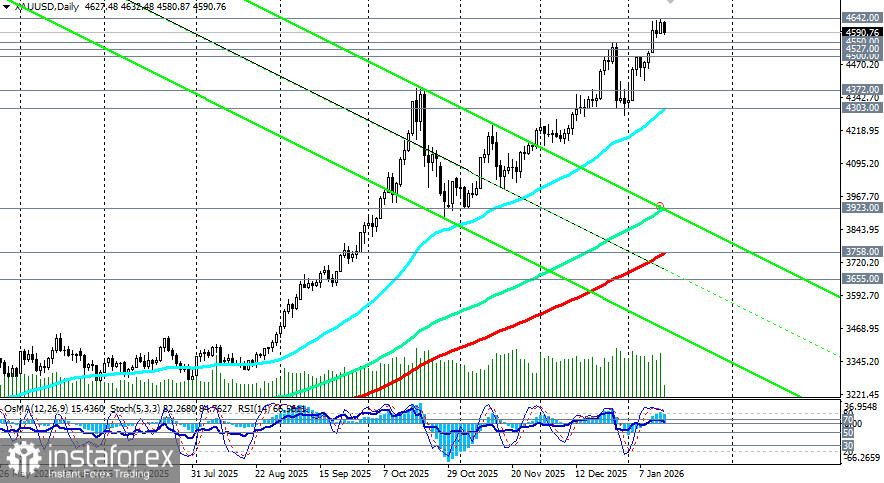
For XAU/USD, technical analysis indicates a range forming between 4,570.00 and 4,640.00 within a rising weekly channel, while technical indicators (RSI, OsMA, Stochastic) on the daily chart have turned short, and on smaller timeframes (4-hour, 1-hour) recommend selling.
Key short-term support is at 4,527.00 (EMA200 on the 1-hour chart, also EMA50 and the lower line of the rising channel on the 4-hour chart). A break of the 4,527.00–4,500.00 support zone could intensify the pressure.
Resistance is at the all-time high of 4,642.00.
Prospects for the dollar
Prospects for the dollar remain positive in the short term amid expectations that higher rates will persist for longer. However, upside potential may be limited by two factors:
- Concerns about the Fed's independence. The conflict between the Trump administration and Fed Chair Jerome Powell, including threats of legal action, creates institutional risk.
- The upcoming change in Fed leadership. Trump is expected to announce Powell's successor in January, and the nominee will be a major near-term market trigger. Most candidates are seen as more dovish, including White House economic adviser Kevin Hassett, former Fed Chair Kevin Warsh, and current Fed governors Christopher Waller and Michelle Bowman.
What's for today?
Today, market participants will focus on the weekly initial jobless claims report in the US (to be released at 13:30 GMT). Later, Fed officials will speak — Raphael Bostic, Michael Barr, Thomas Barkin, and Jeff Schmid — between 13:35 and 18:30 GMT.
Conclusion
Current market dynamics are driven by the clash between strong US domestic data supporting the dollar and ongoing geopolitical uncertainty that sustains demand for safe havens. In the near term, the scales may tip in favor of the dollar if the Fed reaffirms its hawkish stance and inflation data continue to slow. However, any escalation around Iran or an unexpectedly dovish statement from the incoming Fed chair could quickly reverse the trend and send investors back to gold.
Investors should closely monitor Fed officials' speeches, unemployment data, and above all, the announcement of the new Fed chair.



 15.01.2026 08:12 AM