
Vea también


 26.08.2026 05:04 AM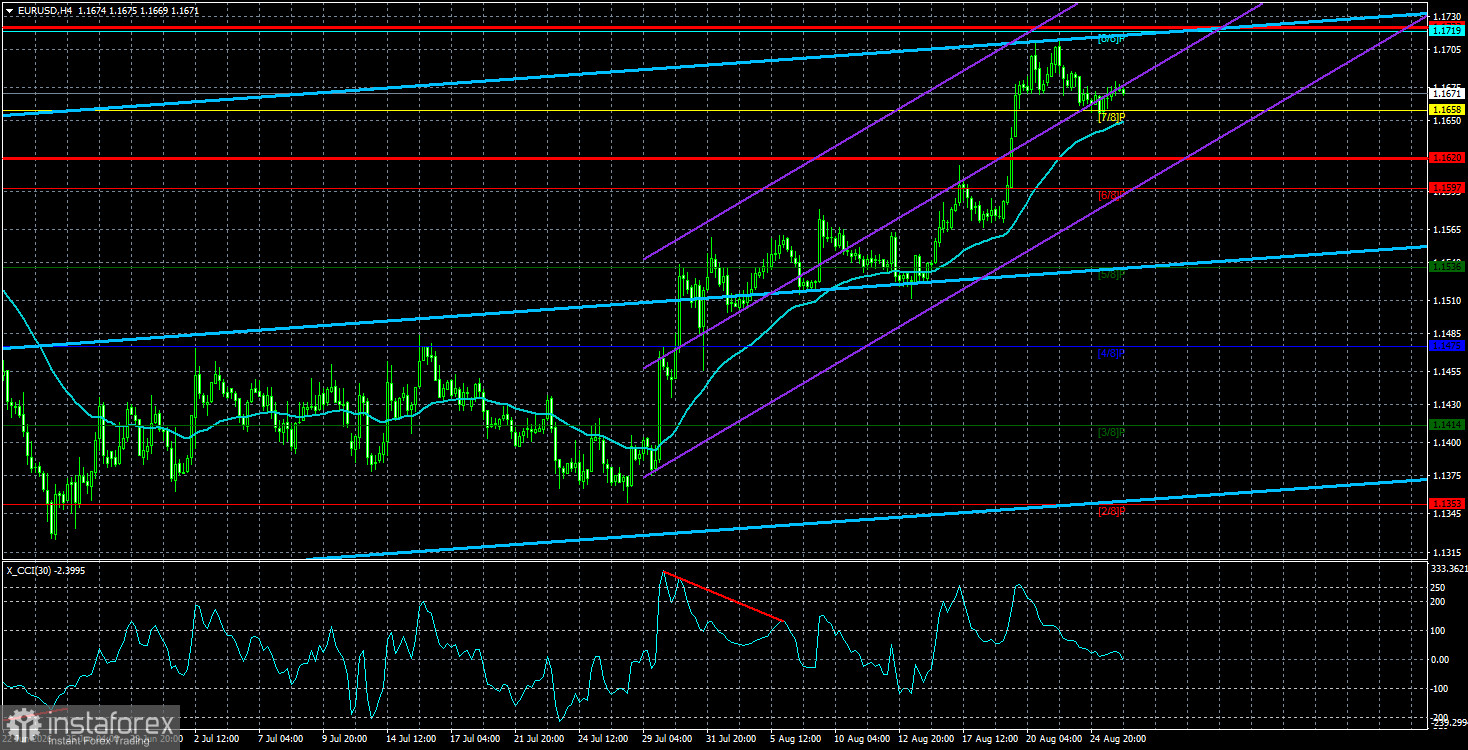
The EUR/USD currency pair showed no interesting movements on Tuesday. Essentially, low volatility should no longer surprise anyone, as since August 4 the daily figure has exceeded 63 pips only once and 46 pips four times. As a result, everyone should have grown accustomed to weak movements. On Tuesday, there were no important fundamental or macroeconomic events in the Eurozone or the U.S. Hence, traders had nothing to react to throughout the day.
Meanwhile, very interesting information has emerged from the Middle East, which the market is currently overlooking. According to Al Arabiya, the U.S. is prepared to lift the economic blockade on Iran in exchange for the reopening of the Strait of Hormuz. It is hard to say how accurate this information is, as in recent days U.S. officials have been focused on announcing new operations against Iran. Trump plans that all countries engaging in business with Iran should stop doing so, which would result in Tehran's complete economic isolation and ultimately its capitulation. In our view, none of Iran's allied countries will cooperate with the U.S., but as the saying goes, dreaming is not harmful.
Trump clearly understands that China is unlikely to stop purchasing Iranian oil just because Washington wants to strain Iran, and that he aims to declare another victory. Therefore, the White House seeks to implement various sanctions against those nations that do not support the economic blockade of Iran and continue to sponsor it. Again, it is hard to believe that Washington would engage in a new conflict with Beijing; however, one can expect anything from Trump.
Returning to Al Arabiya's insight, we can certainly accept that the information is true. This aligns with Trump's approach: first threaten, then show flexibility and make concessions. Announce new strikes against Iran, and then report that partners persuaded the American president not to do so. Thus, Washington may be genuinely ready to lift its economic isolation in exchange for the reopening of the Strait of Hormuz. But will this arrangement suit Iran? We believe not. For Iran, the Strait of Hormuz remains a key lever of pressure not only on Trump but on the entire world. Thanks to this lever, Tehran can defeat Trump and significantly diminish his influence on any state decisions. The congressional elections are approaching, and with current ratings, Trump is certainly set to lose. If he loses, he will no longer be able to unilaterally make decisions about sanctions and strikes against Iran. Therefore, there is no sense in Tehran opening the Strait of Hormuz. If Washington does proceed with the economic isolation, Iran may well also close the Bab-el-Mandeb Strait, escalating pressure on energy markets and the American electorate.
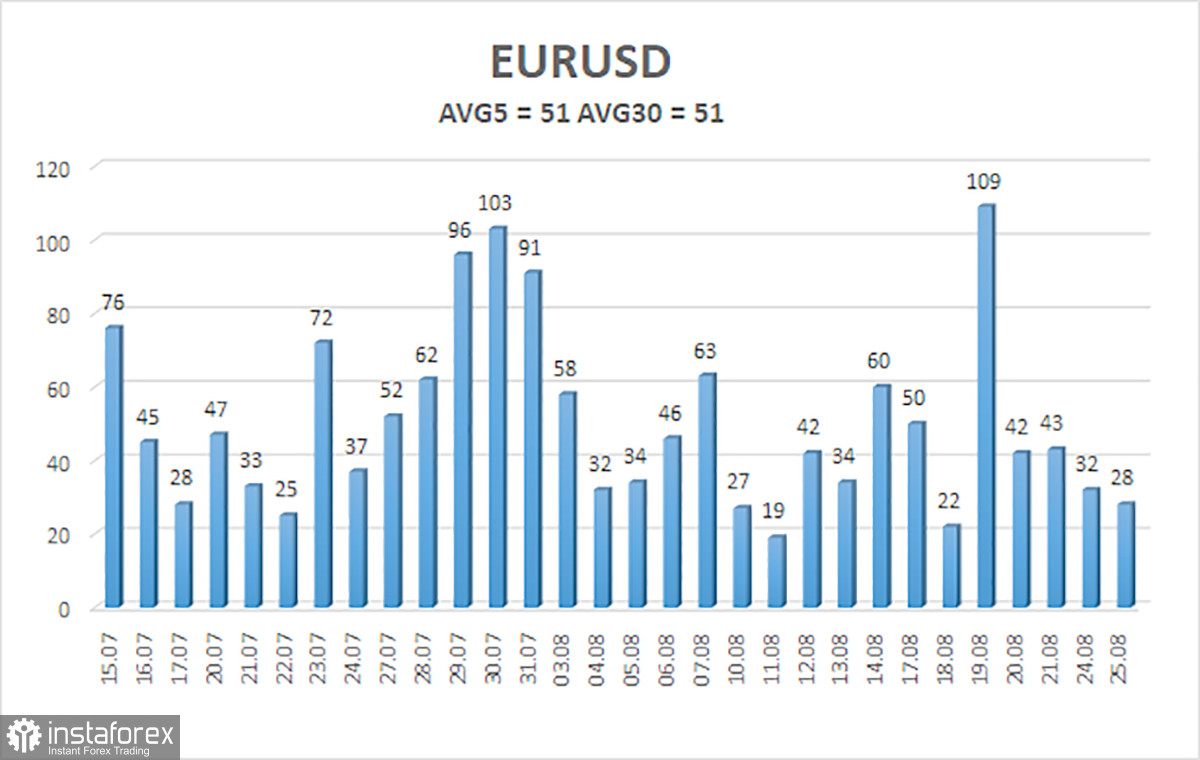
The average volatility of the EUR/USD currency pair over the last 5 trading days as of August 26 is 51 pips, characterized as "medium-low." We anticipate movement in the pair between 1.1620 and 1.1722 on Wednesday. The upper linear regression channel is directed downward, indicating the continuation of a bearish trend; however, the trend has already changed. The CCI indicator has reentered the overbought area, signaling a possible new downward correction.
S1 – 1.1658
S2 – 1.1597
S3 – 1.1536
R1 – 1.1719
R2 – 1.1780
R3 – 1.1841
The EUR/USD pair continues to exhibit an upward trend on the 4-hour timeframe, which may signal the beginning of a new phase in the global bullish trend on higher timeframes. The overall fundamental backdrop for the dollar remains negative, but in 2026, geopolitical factors, followed by the Fed's hawkish stance, provided strong support for the American currency. However, these factors no longer support the dollar at this time.
When the price is below the moving average, short positions can be considered based on corrective grounds, with a target of 1.1597. Above the moving average, long positions remain relevant with targets of 1.1719 and 1.1722.


