
Vea también


 17.04.2026 12:42 AM
The second critical question concerns Iran's nuclear energy, and the situation here is somewhat different. Nuclear fuel and weapons for Iran are a means of ensuring security. As shown in 2025 and 2026, those guarantees are quite questionable, but at the same time, the possession of nuclear weapons allows Tehran to look to the future with greater confidence. Thus, nuclear developments, uranium enrichment, and nuclear energy are fundamental issues for Iran that it will not abandon under any circumstances. Tehran has had numerous opportunities to relinquish nuclear energy in exchange for the lifting of all sanctions, which would allow it to sell oil to any country in the world again. However, for 50 years, Iran has not relented. What are the chances that JD Vance's delegation will convince Iran to move all its nuclear stock outside of the country after the U.S. initiated a full-scale war in the region? Iranian leaders have already stated that they do not trust the Americans.
Vance himself stated that America seeks to establish a "great deal" with Iran and does not want to settle for small agreements. However, he did not specify what this "great deal" entails. Nonetheless, Vance hinted that Trump is offering Iran to abandon its nuclear weapons and funding for terrorist organizations in exchange for lifting sanctions. Thus, the bargaining chips in 2026 remain the same as they have been for the past 50 years.
Based on all of the above, I believe that negotiations will fail this week. However, the parties may reach informal agreements to mutually open the Strait of Hormuz (currently blocked by both Iran and the U.S.) and cease hostilities. These agreements would resolve 80% of the energy issues that the world has faced in the past month and a half. I see no other possible outcomes.
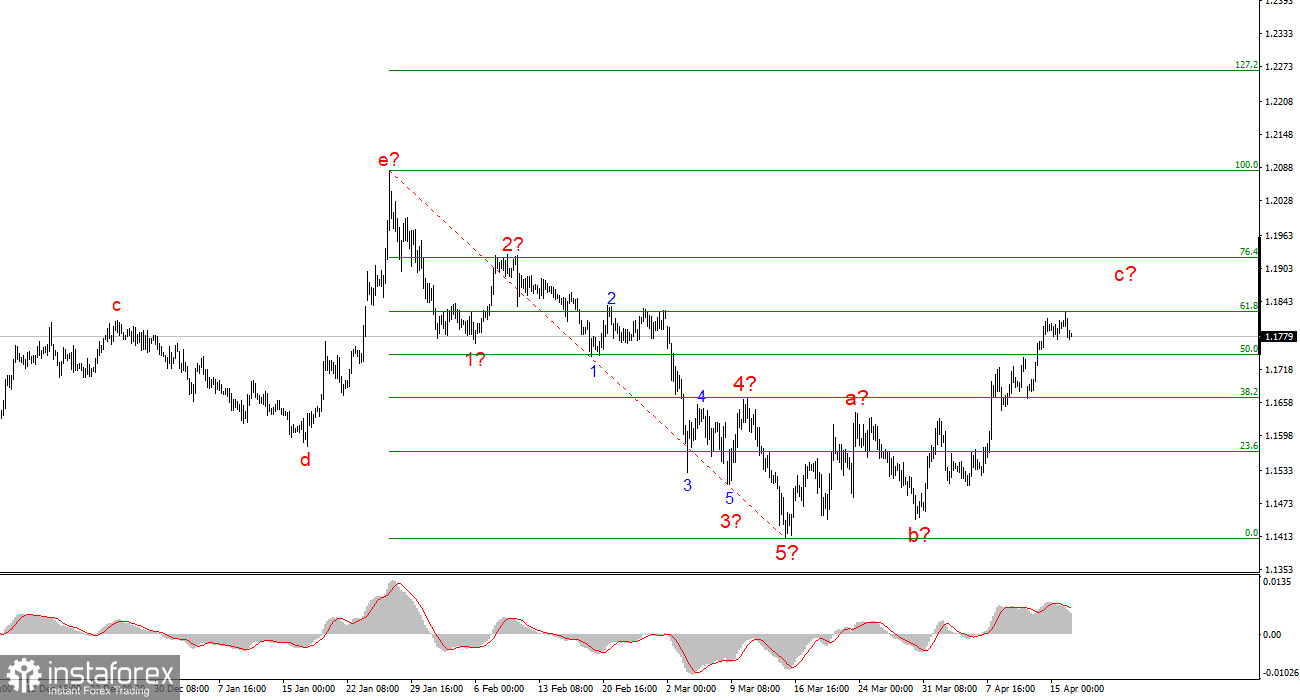
The first scenario (which I mentioned earlier) is that the demand for U.S. currency will continue to decline, albeit slightly, while the market shifts its focus back to the economy and monetary policy. The second scenario is optimistic. Iran and the U.S. will sign a "great deal." Demand for U.S. currency will continue to decline, but not significantly, and the market will again shift its attention to the economy and monetary policy. The third scenario is pessimistic. Negotiations will fail, the Strait of Hormuz will remain blocked, the Bab-al-Mandab Strait will join the blockade, and hostilities will resume. Demand for U.S. currency will begin to grow again, and this could persist for a long time.
Based on the analysis of EUR/USD, I conclude that the instrument remains within an upward segment of the trend (bottom picture) and, in the short term, is within a corrective structure. The corrective wave set looks quite complete and may take on a more complex, elongated form only if a stable ceasefire is established between Iran, the U.S., Israel, and ALL other countries in the Middle East. Otherwise, I believe that a new downward wave set may start from the current positions. A failed attempt to break the 1.1824 mark may lead to a price retreat from recent highs.
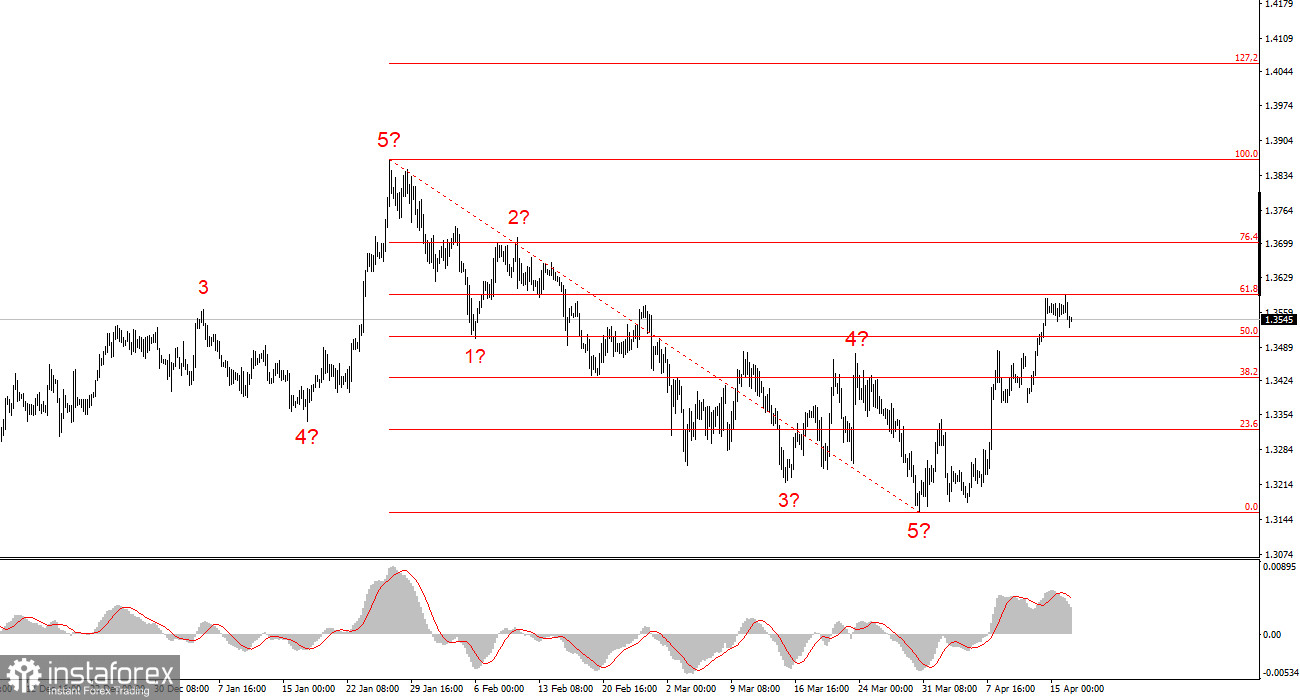
The wave picture of the GBP/USD instrument has become clearer over time, as I had anticipated. Now we see a clear five-wave downward structure with an extension in the third wave on the charts. If this is indeed the case, and geopolitics does not provoke a new collapse of the instrument in the near future, we can expect the formation of at least a three-wave corrective structure, within which the pound may rise to levels of 1.3594 and 1.3698, corresponding to 61.8% and 76.1% Fibonacci levels. If a ceasefire is reached, the corrective segment of the trend may turn into an impulsive one. A failed attempt to break the 1.3594 mark could lead to a retreat from the reached peaks.


