
Lihat juga


 22.09.2026 05:55 PM
EUR/USD plunged to its lowest level since late July amid the worsening political crisis in Germany, the increased likelihood of tighter monetary policy by the Federal Reserve, and renewed interest in U.S. assets. However, the approaching UN summit, optimism about the resumption of diplomatic efforts to resolve the conflict in the Middle East, and the upcoming meeting between Donald Trump and Xi Jinping could improve global risk appetite and put pressure on the U.S. dollar as a safe-haven asset.
According to ECB Chief Economist Philip Lane, the eurozone economy is facing a second wave of price increases, affecting not only oil but also gas. According to the European Central Bank, this second wave will result in higher and more persistent inflation than previously expected. As a result, CPI will return to the 2% target only in 2027, according to the Governing Council's updated forecasts.
ECB Economic and Inflation Forecasts
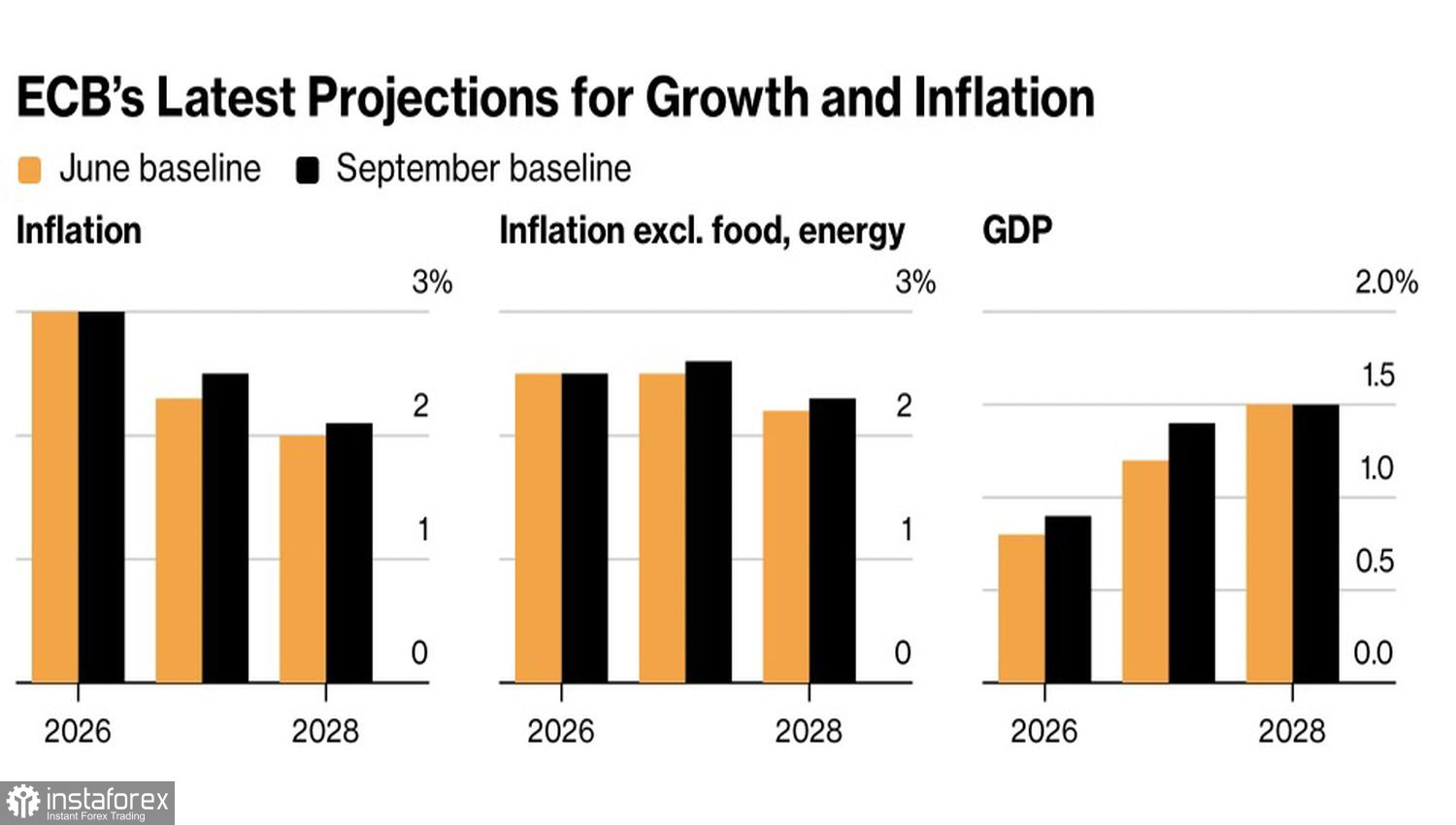
Such rhetoric means that the ECB is prepared to continue its monetary policy tightening cycle. Nevertheless, the futures market expects the deposit rate to rise only to 2.63% by October, implying a 50–52% probability of a rate hike. CME derivatives put the probability of monetary tightening by the Federal Reserve by that time at 53%. The risks are comparable. The same applies to December. In other words, based on this factor, neither the U.S. dollar nor the euro has an advantage.
The difference is that the ECB has not lost market confidence, while the Fed has only just regained it thanks to Kevin Warsh's intention to continue fighting inflation until it is brought under control. This allows U.S. assets to benefit from a recovery in demand. As a result, Treasury yields are falling, the Nasdaq Composite is reaching a record high, and the U.S. dollar is strengthening.
Changes in Germans' Confidence in the Chancellor
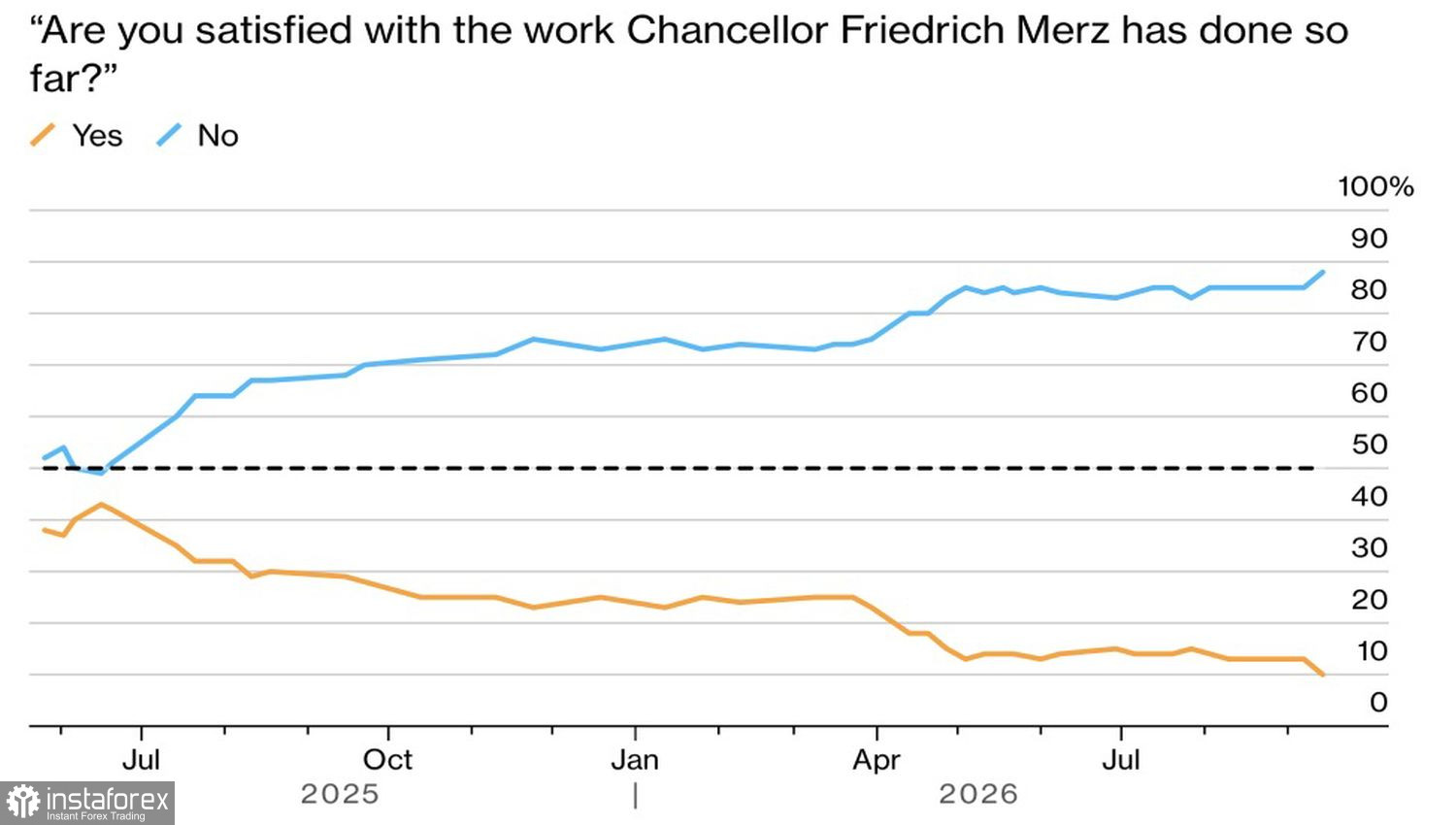
The flow of capital from Europe to North America is being supported by rising political risks. After the CDU lost three regional elections in Germany, Friedrich Merz's political standing deteriorated sharply, and his position as chancellor became increasingly uncertain. If the party changes its leader, the outflow of capital from the Old World could accelerate, which would weigh on EUR/USD.
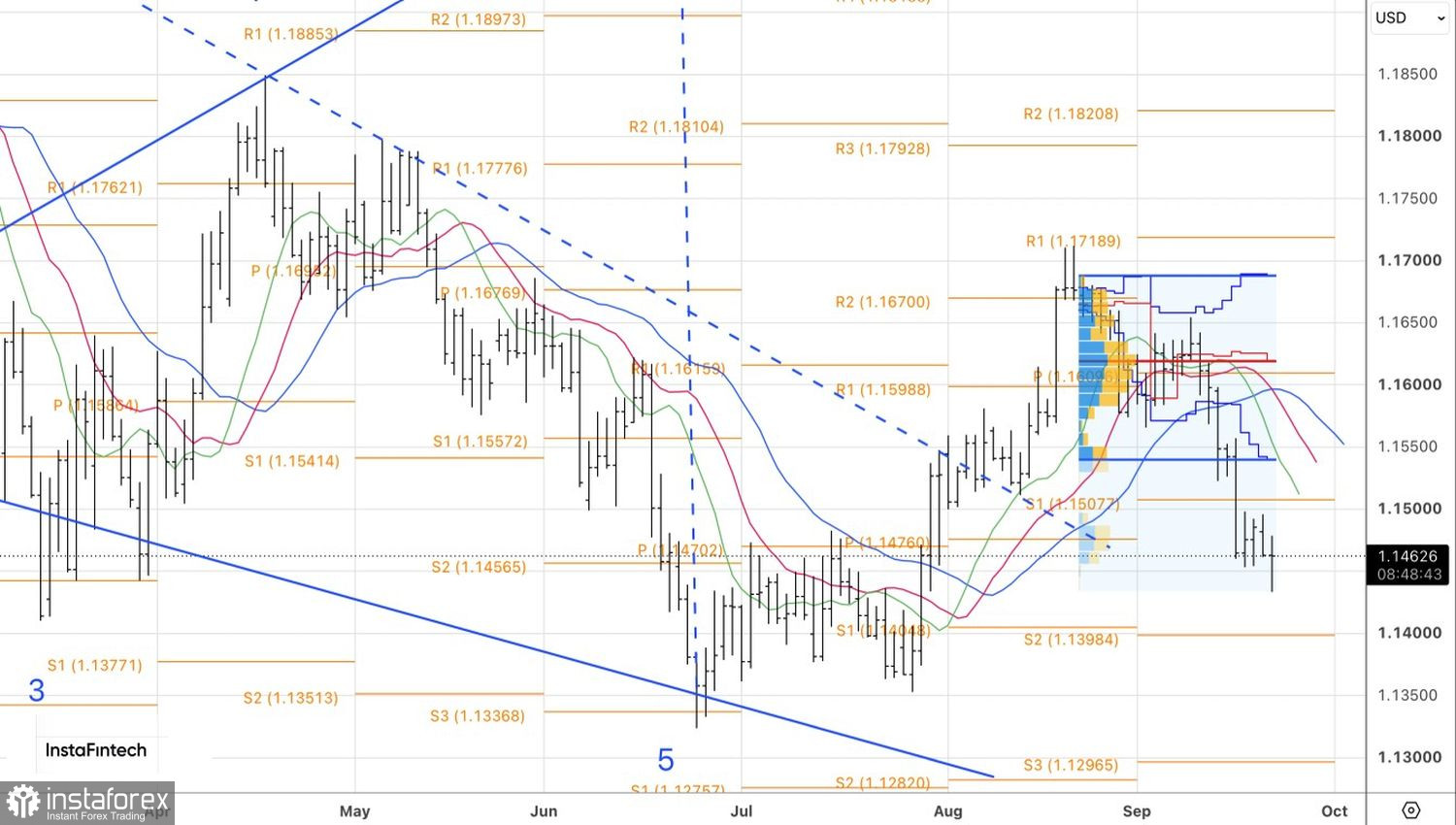
The euro "bears'" unsuccessful attempt to break through the local low is related to traders' reluctance to force the issue. Eurozone and U.S. business activity data will be released a day later. A widening gap between the two economies could reactivate the U.S. exceptionalism factor and lead to a further decline in the main currency pair. It is simply a matter of waiting.
Technically, the daily EUR/USD chart is forming a pin bar with a long lower shadow, signaling weakness among the "bears" and creating an opportunity to place a pending buy order near the pin bar's high at 1.148. At the same time, sellers remain in control of the situation, so it is advisable not to become too aggressive with long positions.


